Mio先生の医学部英語道場 近畿大 英語2026
2026年度 一般入試前期 A〜H 全39問要確認を正直に表示そっくり類題セット

近畿大学
医学部 英語
2026年度 解答・解説

問題文は掲載できませんが、
解説を読むだけでどんな問題かもわかる!

さらに、そっくり類題PDFを見れば、実際の問題イメージもわかるよ!

各設問を「どういう問題か」から説明し、語彙・文法は根拠まで丁寧に、長文は要点をつかんで解説。最後に、本番と同じA〜Hの構成で作ったそっくり類題セット(全問解答つき)で、2026年度を丸ごと演習できます。

Mio先生
解説:Mio先生・ニックニ先生(TMPS医学館) / 更新:2026.11.8 / 読了 約25分

📌 このページの使い方

  1. 過去問集をお持ちの方:本番と同じ60分で解き、答え一覧で採点してから解説へ
  2. お持ちでない方:各設問の「どういう問題か」を読めば、問題の中身がそのまま分かります
  3. 最後にそっくり類題セット(PDF版あり)を60分で解き、初見でも同じ解き方ができるか確かめる

※ 著作権に配慮し、入試問題の本文・設問文は掲載していません。設問番号・選択肢の記号(ア〜オ)は、本番の解答欄との対応を示すためのものです。※ 過去問集で公開解答を確認できたのは(A)(B)の(1)〜(6)のみです。(7)以降はTMPSが本文から独立に導いた答えで、判断が割れうる設問には「要確認」を付けています。

⚠️ 問題等で誤りを発見された場合、修正しますので、TMPS医学館までLINEを下さい。(迅速に確認・更新いたします)

LINEで誤りを連絡
SUMMARY

3分で分かる 2026年度の近畿大の英語

Yuiちゃん
Yuiちゃん
60分で39問、記述もあるのかと思っていました…。
Mio先生
Mio先生
全部マークだよ。語彙の15問を速く終えれば、長文に時間が回る。まず60分の使い方を決めよう!
ニックニ先生
ニックニ先生
(A)〜(C)は1問50秒が目安です。知らない熟語に粘らず、印をつけて先へ。長文のほうが取り返せる点数は大きいです。
STRATEGY MAP

60分の立ち回りマップ

時間はTMPSの目安です。解く順番と「捨てどころ」をセットで覚えておきましょう。
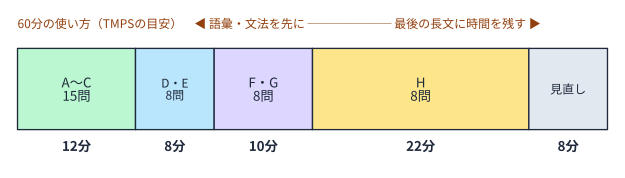
60分の時間配分。A〜C 12分、D・E 8分、F・G 10分、H 22分、見直し8分
図A 60分の使い方(TMPS作成)

各大問の中身(設問番号と、問われる力)はこの図のとおりです。

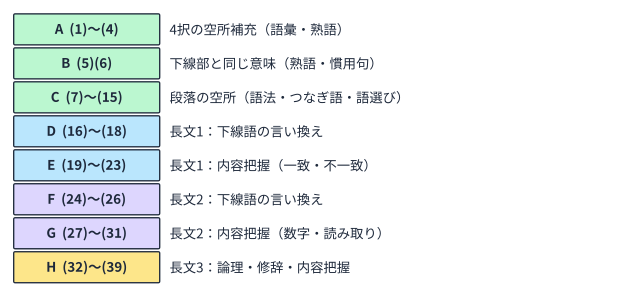
大問A〜Hの構成。A(1)〜(4)語彙、B(5)(6)同義、C(7)〜(15)段落の空所、D・E長文1、F・G長文2、H長文3
図B 2026年度の構成(TMPS作成)
🧭 おすすめの解く順番
(A)(B)(C) → (D)(E) → (F)(G) → (H) → 見直し
長文では、先に下線語の言い換え(D・F)を取り、そのあと内容把握(E・G)へ。(H)は設問が多く論理読みになるので、22分を確保しておきましょう。
(A)〜(C) / 目標:12分(設問(1)〜(15))

(A)〜(C) 語彙・熟語・語法 ── 1問50秒、根拠は空所の前後だけ

(A)は短い1文の空所補充(4問)、(B)は下線部と同じ意味を選ぶ問題(2問)、(C)は長めの段落の空所補充(9問)。選択肢はすべてア〜エの4つです。

現場戦略試験会場でのリアルな立ち回り((A)〜(C))
⏱ 目標時間 & 死守ライン目標12分((A)(B)で4分、(C)で8分)。知っているかどうかで決まる問題が多いので、30秒悩んで決まらなければ印をつけて先へ。
⚠️ 損切り・警戒ライン(C)は段落全体の意味から決める問題が混ざります。前後の文の流れ(順接か逆接か)を先に押さえると速くなります。
💡 初手の思考トリガー選択肢を見たら、まず品詞と形(他動詞か、前置詞を伴う句動詞か)を確認。意味はそのあとで確かめる。
Yuiちゃん
Yuiちゃん
熟語は知らないと解けなくて、固まってしまいます…。
Mio先生
Mio先生
まず形で絞ろう。たとえば「あとに前置詞が来る動詞か」「目的語が人か物か」。それで半分は消えるよ。
ニックニ先生
ニックニ先生
知らない問題に粘らない。ここで1問落としても致命傷ではなく、悩んだ時間のほうが痛いです。

(A)(B) 短い空所補充と同義語

(1)熟語(前置詞)

📝 どういう問題か?

スキーを好きになるとは思っていなかった人が、やがてそれを好きになった、という文。空所に入る前置詞を、ア〜エの4択から選ぶ。

    〈take to ~〉=「~が好きになる、~に熱中する」。in / on / after は〈take in(理解する)〉〈take after(似る)〉など別の意味の熟語になるので、意味で見分ける。

    🎯 (1) の答え
    ウ(to)

    (2)語彙(動詞)

    📝 どういう問題か?

    「資金が底をつきそうだ」という会話に続いて、来年のイベントの予算をどうするか、を表す動詞を選ぶ。

      資金が足りない→予算を引き締めるのが自然。tighten =「(予算・規則を)厳しくする」。inflate(膨らませる)は逆。pay / spend は「予算を支払う・使う」では意味が合わない。

      🎯 (2) の答え
      エ(tighten)

      (3)語彙(動詞)

      📝 どういう問題か?

      その新しい技術の利点を知りたくて、どうすることにしたか、を表す動詞を選ぶ。

        〈embrace + 新しい技術〉=「(進んで)採用する、受け入れる」。inform は「人に知らせる」で、目的語が人になる。confront(立ち向かう)、stimulate(刺激する)は「利点を知りたい」という流れに合わない。

        🎯 (3) の答え
        イ(embrace)

        (4)語彙(動詞)

        📝 どういう問題か?

        キャンペーンのために、人目を引きそうな言い回しをどうしようとしたか、を表す動詞を選ぶ。

          〈coin a phrase〉=「新しい言い回しを作り出す」。lead / imply / result は「言い回しを作る」という意味で他動詞として使えない(result は自動詞)。

          🎯 (4) の答え
          ア(coin)

          (5)下線部の同義(all but)

          📝 どういう問題か?

          古代の城が地震で「ほとんど」破壊された、という文。下線部〈all but〉と意味が最も近い語を選ぶ。

            〈all but ~〉は「~以外すべて」から「ほとんど~」の意味(almost)。virtually が最も近い。roughly は数量の「おおよそ」、entirely は「完全に」で逆向き、severely は「ひどく」で程度の語。

            🎯 (5) の答え
            エ(virtually)

            (6)下線部の同義(stand one's ground)

            📝 どういう問題か?

            費用削減の計画が批判されても、役員会で自分の立場を「貫いた」、という文。下線部と意味が最も近いものを選ぶ。

              〈stand one's ground〉=「自分の立場を譲らない」。「批判された」のに譲らなかった、という流れなので、defended his decision(決定を擁護した)が近い。softened his position は逆。

              🎯 (6) の答え
              イ(defended his decision)

              (C) 段落の空所補充((7)〜(9)・(10)〜(13)・(14)(15)の3つの段落)

              本文は3つの短い段落で、順に気候変動と炭素の貯蔵(7〜9)、身の回りの化学物質と腸内細菌(10〜13)、脳をたとえで説明する話(14・15)です。段落ごとに前後の流れを押さえてから、空所を埋めます。

              (7)動詞(語選び)

              📝 どういう問題か?

              二酸化炭素を吸収する森や海が、大気中のCO2の何を遅らせるか、の空所。ア〜エの4語から選ぶ。

                森や海がCO2を吸収する→大気中の「蓄積(buildup)」と地球温暖化の「ペース」を遅らせる。input(投入)は人間側の行為、reduction は「減少」で、減少を遅らせたら逆の意味になる。spread(拡散)と迷うが、大気中のCO2量の話では buildup が標準的。

                🎯 (7) の答え
                ウ(buildup)

                (8)句の意味

                📝 どういう問題か?

                吸収された炭素が貯蔵される場所は、長期的な安定と管理に対して「どうなっているか」の空所。

                  炭素を貯める場所のあり方が、長期的な安定を左右する(govern)、という意味。avoid / prevent / restrict は「安定を避ける・妨げる・制限する」となり、文意に合わない。

                  🎯 (8) の答え
                  イ(govern)

                  (9)つなぎ語

                  📝 どういう問題か?

                  直前は「炭素の貯蔵場所は重要」。直後は「炭素が陸上の貯蔵庫にどう分散するかはよく分かっていない」。空所に入るつなぎ語を選ぶ。

                    重要だと分かっているのに、肝心のことは分かっていない→逆接。Yet が「しかし」。Thus / Hence は順接、Also は追加で、いずれも文脈に合わない。

                    🎯 (9) の答え
                    ア(Yet)

                    (10)句動詞

                    📝 どういう問題か?

                    「フォーエバー・ケミカル」と呼ばれる物質が、環境中で何百年もかかって「どうなるか」。空所の動詞を選ぶ。

                      〈break down〉=「分解される」。「何百年もかけて分解される」から、環境中に残り続けるという話につながる。slow down は「遅くなる」で、物質自身が遅くなるという意味にならない。

                      🎯 (10) の答え
                      エ(break)

                      (11)句動詞(前置詞との組み合わせ)

                      📝 どういう問題か?

                      科学者たちは、物質を人体に届く前に取り除く方法を「求めて〜してきた」。空所の-ing形を選ぶ。

                        〈scramble for ~〉=「~を求めて奔走する」。直後の for ways と結びつくのは scrambling だけ。blame(責める)、propose(提案する)、present(提示する)は〈for ways〉の形にならない。

                        🎯 (11) の答え
                        エ(scrambling)

                        (12)句動詞

                        📝 どういう問題か?

                        腸内細菌でその物質を集め、それを老廃物として体外に「運び出す」。空所の動詞を選ぶ。

                          〈carry ~ out〉=「運び出す」。waste(老廃物)として体外へ出す、という意味に合う。hand out(配る)、point out(指摘する)、figure out(解明する)はいずれも「排出する」意味にならない。

                          🎯 (12) の答え
                          イ(carry)

                          (13)語法(help + 人 + 原形)

                          📝 どういう問題か?

                          長年のつき合いである細菌が、私たちがそのことに対して何かをするのを「助けてくれる」かもしれない、という文。

                            〈help + 人 + 原形〉=「人が~するのを助ける」。prompting / instructing は〈人 to 動詞〉の形をとるので、原形の do にはつながらない。making は形の上では成り立つが、「~させる(強制)」の意味になり、細菌が私たちの味方になるという文脈に合わない。

                            🎯 (13) の答え
                            イ(helping)

                            (14)比喩(名詞)

                            📝 どういう問題か?

                            脳は、何千種類もの細胞が互いに結びついて一つの網をつくる「〜のようなもの」。この比喩の名詞を選ぶ。

                              直後の「生物学者が植物や動物の種を記録するように」と対応するので、生き物の相互依存を表すecosystem(生態系)。idea / entity / engine では、細胞が互いに依存しあう様子を表せない。

                              🎯 (14) の答え
                              エ(ecosystem)

                              (15)動詞(-ing形)

                              📝 どういう問題か?

                              神経科学者は何十年もかけて、細胞の異なる「種」を〜してきた。空所に入る-ing形を選ぶ。

                                植物や動物の種を「記録する」のと対応して、細胞の種類を識別する(identify)。networking は動詞として目的語をとる形に合わない。growing / cultivating(育てる)では、細胞の種類を調べる研究の話にならない。

                                🎯 (15) の答え
                                エ(identifying)
                                ニックニ先生の総整理表

                                (A)〜(C):設問タイプ別の着眼点

                                型設問着眼点
                                熟語・句動詞(1)(10)(11)(12)前置詞・副詞とのかたまりで覚える(take to / break down / scramble for / carry out)
                                語彙(動詞)(2)(3)(4)(7)(15)目的語との相性(tighten a budget / coin a phrase / identify species)
                                同義語(5)(6)熟語の意味を日本語で言い換えてから選択肢を見る(all but =ほとんど)
                                つなぎ語・語法(8)(9)(13)(14)前後の流れ(順接か逆接か)、help + 人 + 原形、比喩の対応
                                TMPSコーチング診断

                                🩺【自己診断】(A)〜(C)で手が止まった人への処方箋

                                • (1)(10)〜(12)句動詞が出てこない → 動詞と前置詞を「かたまり」で音読して覚える(take to / break down / carry out)
                                • (2)(3)(4)(15)動詞の意味が決まらない → 目的語(budget / technology / phrase / species)との相性を先に見る
                                • (5)(6)同義語で迷う → 熟語を日本語に直してから選択肢を見る。選択肢の英語を見て決めない
                                • (8)(9)(13)(14)前後の流れが読めない → 順接か逆接か、比喩の対象は何か、を一言でメモしてから選ぶ
                                (D)(E) / 長文1 / 目標:8分(設問(16)〜(23))

                                (D)(E) 長文1(行政とAI)── 下線語を先に、内容把握は第2・3段落から

                                行政の審査業務に生成AIを導入した、という記事です。設問は下線語の言い換え3問(D)と、内容把握5問(E)。本文は3段落で、それぞれが1〜2問に対応します。

                                現場戦略試験会場でのリアルな立ち回り((D)(E))
                                ⏱ 目標時間 & 死守ライン目標8分。(D)の3問を先に3分で。(E)は設問を先に読み、第2・3段落から根拠を探す。
                                ⚠️ 損切り・警戒ライン(E)でNOT問題・「最も支持される」問題が決まらなければ印をつけて先へ。(F)(G)の後で戻る。
                                💡 初手の思考トリガー(D)は下線語の前後の語句が答えのヒント(言い換えが直後にあることが多い)。
                                Yuiちゃん
                                Yuiちゃん
                                人工知能の記事は、専門用語が多くて身構えてしまいます。
                                Mio先生
                                Mio先生
                                専門用語は設問で問われないことが多いよ。段落ごとに「何の話か」を一言でまとめれば、設問の根拠はすぐ見つかる。
                                ニックニ先生
                                ニックニ先生
                                (E)の「しないこと」を選ぶ問題は、本文の列挙に○をつけて消去します。残った一つが答えです。

                                本文の要点(長文1):アメリカ食品医薬品局(FDA)が、審査担当者を助ける生成AIの道具を導入した話。①予定より前倒しで全局に広まり、費用も予算内に収まった、②審査・安全報告・検査先の優先づけなど、日常的な仕事を速くする、③人間が判断する流れは変えない、④データは役所の中にとどめ、外部の会社のデータで学習させない、の4点が段落ごとに並びます。

                                (16)下線語の言い換え(outsized)

                                📝 どういう問題か?

                                第2段落で、日常業務の一部を自動化すると、どんな見返りが得られるかを述べる形容詞。同じ意味の語を、ア〜オの5択から選ぶ。

                                  〈outsized returns〉=「並外れて大きな見返り」。選択肢の中で「より大きい」を表すのは greater。moderate(適度な)や futile(むだな)は反対の方向。

                                  🎯 (16) の答え
                                  イ(greater)

                                  (17)下線語の言い換え(autonomous)

                                  📝 どういう問題か?

                                  第2段落で、この道具は「〜な判断」をしているわけではない、と述べる形容詞。

                                    直後に「人間が関与しない(without a human in the loop)」と言い換えがある。autonomous=自分で判断する、他に頼らない。independent が最も近い。automatic(自動の)は、機械的に動くという意味で似て見えるが、「判断の主体」を表す語ではない。

                                    🎯 (17) の答え
                                    オ(independent)

                                    (18)下線語の言い換え(mounting)

                                    📝 どういう問題か?

                                    第3段落で、「閉じた」AIへの需要を修飾する形容詞。

                                      〈mounting demand〉=「高まる需要」。growing が同義。precipitous は「急な・険しい」で、需要の増え方の説明として強すぎる。

                                      🎯 (18) の答え
                                      イ(growing)

                                      (19)内容把握(目的)

                                      📝 どういう問題か?

                                      FDAがこの道具を導入した理由は何か、を5択から選ぶ。

                                        第2段落:膨大な資料の一部を自動化するだけで大きな見返りがあり、審査の過程を一部自動化するのが狙い。「人間のミスを減らす」「民間と競う」は本文にない。

                                        🎯 (19) の答え
                                        オ(審査の過程を一部自動化するため)

                                        (20)内容把握(NOT問題)

                                        📝 どういう問題か?

                                        第2段落に列挙された、この道具の働きのうち「しないこと」を選ぶ。

                                          本文の列挙は、有害事象データの要約・薬のラベルの比較・データベース用の基本コードの作成・検査先の優先づけ。選択肢のうち、臨床試験の記録を自動化するという働きだけが本文にない。ただし、ア・イは本文の語を言い換えた形のため、どこまで同じと見るかで判断が割れうる。

                                          🎯 (20) の答え
                                          ウ(臨床試験の記録の自動化) 要確認

                                          (21)内容把握(本文から支持されるもの)

                                          📝 どういう問題か?

                                          本文の情報から最も支持される文を選ぶ。

                                            第1段落:目標を前倒しで達成し、予算内に収めた。→「当初の予想より安くできた」と言い換えられる。ウは「複数の機関」ではなく、一つの機関内。オは「launch was delayed」が本文と逆。

                                            🎯 (21) の答え
                                            ア(当初の予想より安く作れた)

                                            (22)内容把握(課題への対処)

                                            📝 どういう問題か?

                                            外部の会社への依存・データの流出という、AIの弱点に対して、この道具はどう対処しているか。

                                              第3段落:情報は機関内にとどまり、外部の学習データを使わない。→内部で完結する仕組み。民間のデータで学習する(ウ)や外部データを使う(オ)は逆。

                                              🎯 (22) の答え
                                              エ(すべて内部で完結する仕組みをつくる)

                                              (23)内容把握(実際の成果)

                                              📝 どういう問題か?

                                              この道具を導入した結果として、実際に何が起きるか。

                                                第2段落:審査の下準備を速める→FDAの重要なサービスの流れが効率化される。判断は人間が行うので、「判断をなくす」「担当者が不要になる」は誤り。

                                                🎯 (23) の答え
                                                イ(重要なサービスの流れの効率化)
                                                ニックニ先生の総整理表

                                                (D)(E):設問タイプ別の着眼点

                                                型設問着眼点
                                                下線語の言い換え(16)〜(18)直後の言い換え・文脈で意味を決める(outsized=大きな、autonomous=自分で判断する)
                                                目的・理由(19)「なぜ」にあたる段落(第2段落)を探す
                                                NOT・支持される文(20)(21)本文の列挙に○をつけて消去。言い換えがどこまで同じかを確かめる
                                                対処・成果(22)(23)第3段落(データ)と第2段落(業務)の要点を対応させる
                                                TMPSコーチング診断

                                                🩺【自己診断】(D)(E)で手が止まった人への処方箋

                                                • (16)〜(18)下線語が分からない → 直後の言い換え、前後の語句から意味を決め、選択肢を日本語にして比べる
                                                • (19)(22)(23)内容把握が選べない → 第2段落=業務、第3段落=データ、と段落の役割を先にメモする
                                                • (20)(21)NOT・支持文で迷う → 選択肢を本文の語と一つずつ照合し、言い換えの範囲を確かめる
                                                (F)(G) / 長文2 / 目標:10分(設問(24)〜(31))

                                                (F)(G) 長文2(就職内定率の統計)── 数字は最初にメモ、「過去10年」「最高」の範囲に注意

                                                大学卒業者の就職内定率についての記事です。設問は下線語・句の言い換え3問(F)と、内容把握5問(G)。数字と年が多いので、読みながら要点をメモします。

                                                現場戦略試験会場でのリアルな立ち回り((F)(G))
                                                ⏱ 目標時間 & 死守ライン目標10分。(F)の3問は3分で。(G)は数字の読み取りなので、本文の数字に印をつけながら解く。
                                                ⚠️ 損切り・警戒ライン(G)(31)のような範囲の問題(「過去10年」)は、年を書き出して比べる。迷えば印をつけて先へ。
                                                💡 初手の思考トリガー数字は年・グループ・値の3点セットでメモする。
                                                Yuiちゃん
                                                Yuiちゃん
                                                数字がたくさんあると、どこを見ればいいか分からなくなります。
                                                Mio先生
                                                Mio先生
                                                設問のキーワード(最高・最低・過去10年)を先に見て、その条件に合う数字だけを本文で探そう。
                                                ニックニ先生
                                                ニックニ先生
                                                年と数字は書き出して、小さな表にします。頭の中で比べると、取り違えが起きます。

                                                本文の要点(長文2):大学卒業者の就職内定率の統計記事。①今年は過去最高の水準で、パンデミックの影響はほぼ消えた、②統計開始以来の最低は金融危機後、最高は2018・2020年卒、③学部・地域・男女・短大や高専など、グループごとの数字、④担当大臣が、就職先が決まらない人への支援を約束、という構成で、数字の読み取りが中心です。

                                                (24)下線句の言い換え(in the face of)

                                                📝 どういう問題か?

                                                第1段落の、人手不足が続く中で企業が積極的に採用する、と述べる句。同じ意味の語(句)を選ぶ。

                                                  〈in the face of ~〉=「~に直面して、~にもかかわらず」。人手不足は本来、困難な要因なので、「それでも採用が進む」という流れの despite が最も近い。before / behind / in front of は位置・順序の語で、文意と合わない。

                                                  🎯 (24) の答え
                                                  ウ(despite)

                                                  (25)下線語の言い換え(trajectory)

                                                  📝 どういう問題か?

                                                  第2段落の「上向きの〜をたどった」という名詞。

                                                    〈trajectory〉=(たどる)軌跡・進路。〈upward trajectory〉で「上向きの進路(方向)」。選択肢では direction が最も近い。growth(成長)は結果を表す語で、trajectory の「道筋」の意味とずれる。

                                                    🎯 (25) の答え
                                                    エ(direction) 要確認

                                                    (26)下線語の言い換え(favors)

                                                    📝 どういう問題か?

                                                    第2段落の、売り手市場が学生にどうはたらくかを表す動詞。

                                                      〈favor + 人〉=「~に有利にはたらく」。選択肢では benefits(~の利益になる)が近い。prefers は「好む」で、市場が学生を好むという意味にはならない。ただし biases / selects との区別は文脈判断のため、断定を避ける。

                                                      🎯 (26) の答え
                                                      オ(benefits) 要確認

                                                      (27)内容把握(パンデミックの影響)

                                                      📝 どういう問題か?

                                                      パンデミックは採用にどう影響したか。

                                                        第2段落:パンデミックで内定率が下がり始め、その後回復した。→採用を減らした(diminished)。boosted / strengthened / alleviated は逆の方向。

                                                        🎯 (27) の答え
                                                        エ(採用を減らした)

                                                        (28)内容把握(過去の最高年)

                                                        📝 どういう問題か?

                                                        過去に内定率が最高だった年を、選択肢の年号から選ぶ。

                                                          第2段落:最高の98%は2018年と2020年卒。選択肢に出ているのは2020年。2008・2011年は金融危機後の低い年、2021・2023年は回復の途中。

                                                          🎯 (28) の答え
                                                          ウ(2020)

                                                          (29)内容把握(本文から支持されるもの)

                                                          📝 どういう問題か?

                                                          本文の情報から最も支持される文を選ぶ。

                                                            第4段落:就職が決まらない人への支援策が用意されている。エは「雇用主の記録から計算」だが、本文は標本調査(サンプリング)。ウは「地域だけが影響」と言い切っていて強すぎる。

                                                            🎯 (29) の答え
                                                            オ(就職が決まらない人への支援策がある)

                                                            (30)内容把握(数字の比較)

                                                            📝 どういう問題か?

                                                            グループのうち、内定率が最も高かったのはどれか。

                                                              第3段落:高専(技術系の短大)の男子学生のみのグループが100%で最高。地域別の最高は99.6%、女子短大97.4%。

                                                              🎯 (30) の答え
                                                              ウ(高専卒業者)

                                                              (31)内容把握(要因)

                                                              📝 どういう問題か?

                                                              過去10年で最も低い内定率に影響した要因は何か。

                                                                最低記録(2011年卒の91%)は金融危機が原因だが、10年より前。過去10年の範囲では、パンデミック後に落ち込んだ2021年卒(96%)・2022年卒(95.8%)のうち、最も低い2022年卒(95.8%)が該当する。「過去10年」の範囲をどう読むかで判断が割れうる。

                                                                🎯 (31) の答え
                                                                ウ(新型コロナのパンデミック) 要確認
                                                                ニックニ先生の総整理表

                                                                (F)(G):設問タイプ別の着眼点

                                                                型設問着眼点
                                                                句・語の言い換え(24)〜(26)文脈の流れ(逆接か順接か、有利か不利か)で意味を決める
                                                                影響・要因(27)(31)時期の範囲(過去10年)を確かめ、年と数字を書き出す
                                                                数字の読み取り(28)(30)条件(最高・最も高い)に合う数字を探す
                                                                支持される文(29)調査方法・今後の方針など、段落の事実と照合
                                                                TMPSコーチング診断

                                                                🩺【自己診断】(F)(G)で手が止まった人への処方箋

                                                                • (24)〜(26)言い換えが選べない → 空所を使わず、文の流れ(プラス・マイナス)から意味を決める
                                                                • (27)(31)要因・影響で迷う → 時期の範囲と年を書き出し、条件に合うものだけを残す
                                                                • (28)(30)数字の問題 → 最高・最低などの条件を先に決め、該当する年・グループだけを比べる
                                                                • (29)支持される文 → 「言い切り(only / always)」の入った選択肢は疑う
                                                                (H) / 長文3 / 目標:22分(設問(32)〜(39))

                                                                (H) 長文3(動物の体色の進化)── 段落の役割で解く。「But」「たとえ」の狙いを聞かれる

                                                                毒をもつカエルの鮮やかな体色が、なぜ進化したかの議論です。設問は8問すべて内容把握で、段落の要点・語句の含意・実験の読み取り・「But」の働き・たとえの狙い、と論理を読む力が試されます。

                                                                ⚠️ (34)は判断が割れうる問題です。実験の記述(薄めて注射・毒の強さの順に症状が長い)と、選択肢の言い回しがかみ合いにくく、TMPSは消去法で選んだイを「要確認」としています。
                                                                現場戦略試験会場でのリアルな立ち回り((H))
                                                                ⏱ 目標時間 & 死守ライン目標22分。本文8段落を約8分で読み、設問8問に約12分。見直し2分。
                                                                ⚠️ 損切り・警戒ライン(34)のように、選択肢が似ていて迷う問題は印をつけて、他の問題を先に取る。
                                                                💡 初手の思考トリガー段落ごとに役割を一言(主張・例外・原因・仮説・実験・補足・結論)でメモしながら読む。
                                                                Yuiちゃん
                                                                Yuiちゃん
                                                                8段落もあって、読むだけで時間が足りなくなりそうです。
                                                                Mio先生
                                                                Mio先生
                                                                全部を訳さなくていいよ。段落の最初と最後の1文から、役割を一言でメモする。設問が聞くのは、ほぼその役割だから。
                                                                ニックニ先生
                                                                ニックニ先生
                                                                「But」や「たとえ」の問題は、直前と直後の段落の関係を一行で書けば解けます。時間がかかるので、最後に回して構いません。

                                                                本文の要点(長文3):毒をもつカエルの鮮やかな体色が、どう進化したかを説明する科学記事。①体色は警告の役割をもつ(P1)、②多くの動物は決まった模様を守るが、このカエルは多様(P2)、③海面上昇で島に分かれ、別々に進化した(P3)、④毒が強いほど目立つ色になった、という仮説(P4)、⑤実験で確かめた(P5)、⑥天敵の目の仕組み(P6)、⑦色合いだけでなく輝きも関係し、これは配偶者選びに関わる(P7)、⑧クジャクのたとえ(P8)、という8段落の議論です。

                                                                (32)段落の要点(P1)

                                                                📝 どういう問題か?

                                                                第1段落で述べられている主な主張は何か。

                                                                  第1段落の最初の文:鮮やかな色は、はっきりした意味(警告)を伝える。→特徴的な色は重要なメッセージを表せる。「いつも毒がある(ア)」は言い切りが強すぎる。

                                                                  🎯 (32) の答え
                                                                  エ(特徴的な色は重要なメッセージを表せる)

                                                                  (33)語句の含意(conservative approach)

                                                                  📝 どういう問題か?

                                                                  第2段落で、多くの毒をもつ動物の信号の出し方を「保守的」と呼ぶ。その含意は何か。

                                                                    直前に「模様を変えない(unvarying patterns)」とあり、「保守的」の中身はこれ。→均一な(変わらない)視覚的表示に頼る。ア(変える)は逆。

                                                                    🎯 (33) の答え
                                                                    イ(均一な視覚的表示に頼る)

                                                                    (34)実験の読み取り(P5)

                                                                    📝 どういう問題か?

                                                                    マウスにカエルの毒を注射した結果、観察された影響は何で説明できるか。

                                                                      第5段落:毒を取り出して薄めて注射。最も鮮やかなカエルの毒を受けたマウスは長く症状が出た。ア(皮膚に直接触れた)、ウ(加工なし)、エ(最強の状態)は「薄めた」事実と合わない。残る「薄めた濃度」を述べるイが消去法で残るが、効果の差の説明としては厳密さに欠けるため判断が割れうる。

                                                                      🎯 (34) の答え
                                                                      イ(薄めた濃度の毒の影響) 要確認

                                                                      (35)段落間の関係(P1〜P3)

                                                                      📝 どういう問題か?

                                                                      体色とカエルの進化の歴史の関係として最も正確なものはどれか。

                                                                        P2:多くの動物は変わらない模様を守る(例外がこのカエル)。P3:約1万年前は均一→海面上昇で生息地が分断され、体色が多様化。→分断のあとに多様化し、これは毒をもつ動物では珍しい。エ(分断前から多様)は P3 と逆。

                                                                        🎯 (35) の答え
                                                                        オ(生息地の分断後に体色が多様化した)

                                                                        (36)仮説の内容(P4)

                                                                        📝 どういう問題か?

                                                                        第4段落で、研究者の考える「体色と毒性の関係」は何か。

                                                                          P4:毒が強いほど、目立つ色が進化した。強い毒のカエルは目立っても警告になり、毒の弱いカエルは目立たないほうが生き残りやすい。→強い毒とともに鮮やかな体色が進化し、警告として働く。

                                                                          🎯 (36) の答え
                                                                          オ(毒の強さとともに鮮やかな体色が進化した)

                                                                          (37)内容把握(NOT問題)

                                                                          📝 どういう問題か?

                                                                          第6段落で述べられて「いない」ことはどれか。

                                                                            P6:ヘビは人間に見えない色合い(赤外線)を見る、鳥はカエルの全色を見分けられる、多くの動物が色に注目する、体色は主に鳥に対して進化した。「ヘビは赤外線を検知するのに最も効果的な捕食者」とは書かれていない。

                                                                            🎯 (37) の答え
                                                                            エ(ヘビが赤外線検知に最も効果的な捕食者という点)

                                                                            (38)修辞的な働き(P7冒頭の But)

                                                                            📝 どういう問題か?

                                                                            第7段落の冒頭の「But」は、文章の中でどんな働きをしているか。

                                                                              直前(P6)まで「天敵が体色をどう見るか」。But 以下は「色には色相だけでなく明るさもある」と話題を足す。→捕食への防御だけでは、見た目の違いの全部は説明できない、と次の議論を導く。

                                                                              🎯 (38) の答え
                                                                              ウ(捕食への防御だけでは見た目の違いを説明しきれない)

                                                                              (39)たとえの狙い(P8)

                                                                              📝 どういう問題か?

                                                                              第8段落で、カエルをクジャクと比べる論理は何か。

                                                                                P8:オスを目立たせる特徴は、天敵にも見つかりやすいという代償があるのが普通(クジャク)。→しかしカエルは一つの特徴で、配偶者の獲得と警告の両方の利益を得た。

                                                                                🎯 (39) の答え
                                                                                エ(一つの特徴でカエルは二重の利益を得ている)
                                                                                ニックニ先生の総整理表

                                                                                (H):設問タイプ別の着眼点

                                                                                型設問着眼点
                                                                                段落の要点(32)(36)段落の最初の文・最後の文から主張を決める
                                                                                語句の含意(33)直前の言い換え(unvarying patterns)に注目
                                                                                実験・仮説の読み取り(34)(35)何を変えて何を調べたか、因果の向きを確かめる
                                                                                NOT問題(37)本文に書かれたものに○をつけ、残ったものが答え
                                                                                論理・修辞(38)(39)直前・直後の段落の関係(But=話題の追加、たとえ=代償との対比)
                                                                                TMPSコーチング診断

                                                                                🩺【自己診断】(H)で手が止まった人への処方箋

                                                                                • (32)(36)主張が選べない → 段落の最初と最後の文を探し、「言い切り」の入った選択肢は疑う
                                                                                • (34)(35)実験・歴史の問題 → 何をしたか・どう変わったかを時系列で書き出す
                                                                                • (37)NOT問題 → 本文に書かれたものを一つずつ消去する
                                                                                • (38)(39)「But」「たとえ」の問題 → 直前の段落の話題と、直後の段落の新しい話題を一行ずつ書く
                                                                                ANSWERS

                                                                                本番の答え一覧(採点用)

                                                                                解説を読んだあとの最終確認用です。判断が割れうるものには「要確認」を付けています。

                                                                                (A)(B)(C) 語彙・熟語・語法

                                                                                (1) ウ(2) エ(3) イ(4) ア(5) エ(6) イ(7) ウ(8) イ(9) ア(10) エ(11) エ(12) イ(13) イ(14) エ(15) エ

                                                                                (D)(E) 長文1(行政とAI)

                                                                                (16) イ(17) オ(18) イ(19) オ(20) ウ 要確認(21) ア(22) エ(23) イ

                                                                                (F)(G) 長文2(就職内定率)

                                                                                (24) ウ(25) エ 要確認(26) オ 要確認(27) エ(28) ウ(29) オ(30) ウ(31) ウ 要確認

                                                                                (H) 長文3(動物の体色)

                                                                                (32) エ(33) イ(34) イ 要確認(35) オ(36) オ(37) エ(38) ウ(39) エ

                                                                                ※ 過去問集の公開解答で確認できたのは(1)〜(6)で、TMPSの答えと一致しています。(7)以降は、TMPSが本文から独立に導き、解説に書いた根拠で成り立つことを確認したものです。意味の近い選択肢が並ぶ(20)(25)(26)(31)(34)は「要確認」としています。語彙・語法は機械では確かめられないため、根拠を解説に書いています。

                                                                                採点したら → 30秒の得点診断へ
                                                                                TMPS ORIGINAL

                                                                                近畿大2026型 そっくり類題セット
                                                                                (A〜H・全39問・解答解説つき)

                                                                                2026年度の本番と同じA〜Hの構成・同じ設問数(設問(1)〜(39))で、題材と設定を変えたTMPSオリジナル問題です。語彙の即答力と、長文で根拠を探す読み方の練習に使ってください。

                                                                                試験時間の目安 60分語彙・同義語・段落の空所・長文3題
                                                                                📄 本番形式の問題冊子PDFをダウンロード(全10ページ)

                                                                                印刷して本番と同じように60分で解けます。解答・解説はこのページの下に掲載しています。

                                                                                ※ 近畿大学の入試問題ではありません。本文・設問・人物・団体(架空)はすべてTMPS医学館が作成したオリジナルで、出典のある引用ではありません。

                                                                                類題 (A)

                                                                                (A) Complete the following sentences with the best word.
                                                                                空所に入る最も適切な語を、ア〜エから一つ選べ。

                                                                                (1) The new intern soon got the 1 of the filing system.

                                                                                1. ア habit
                                                                                2. イ cause
                                                                                3. ウ edge
                                                                                4. エ hang

                                                                                (2) A: "The printer keeps jamming."
                                                                                B: "Then we'd better 2 it before the report is due."

                                                                                1. ア repair
                                                                                2. イ hurt
                                                                                3. ウ damage
                                                                                4. エ spoil

                                                                                (3) She was nervous, but she decided to 3 the challenge.

                                                                                1. ア accept
                                                                                2. イ expect
                                                                                3. ウ except
                                                                                4. エ access

                                                                                (4) The two friends met in secret to 4 a plan for the surprise party.

                                                                                1. ア heal
                                                                                2. イ hang
                                                                                3. ウ hatch
                                                                                4. エ hide
                                                                                ▶ 類題 (A) の答えと解説
                                                                                • (1) エ(hang)…get the hang of ~(~のコツをつかむ)。edge・habit・cause では熟語にならない。
                                                                                • (2) ア(repair)…「直す」は repair。spoil・damage・hurt は「悪くする」方向で、文脈に合わない。
                                                                                • (3) ア(accept)…形の似た語の区別。「挑戦を受けて立つ」は accept the challenge。except は「除く」、access は「~に接近する」。
                                                                                • (4) ウ(hatch)…hatch a plan(計画をひそかに練る)。ほかは plan とは結びつかない。
                                                                                類題 (B)

                                                                                (B) Choose the answer that is closest in meaning to the underlined phrase.
                                                                                下線部と意味が最も近いものを、ア〜エから一つ選べ。

                                                                                (5) The newly appointed director turned a blind eye to the problem.

                                                                                1. ア examined
                                                                                2. イ reported
                                                                                3. ウ solved
                                                                                4. エ ignored

                                                                                (6) He decided to bite the bullet and sign the contract.

                                                                                1. ア cancel the deal
                                                                                2. イ accept an unpleasant task and face it
                                                                                3. ウ hesitate for a while
                                                                                4. エ celebrate the agreement
                                                                                ▶ 類題 (B) の答えと解説
                                                                                • (5) エ(ignored)…turn a blind eye to ~=「~を見て見ぬふりをする」= ignore。
                                                                                • (6) イ(accept an unpleasant task and face it)…bite the bullet=「いやなことを覚悟して引き受ける」。signing が「いやだが避けられないこと」という文脈。
                                                                                類題 (C)

                                                                                (C) Complete the following paragraphs with the best word.
                                                                                次の3つの段落の空所(7)〜(15)に入る最も適切な語(句)を、ア〜エから一つずつ選べ。

                                                                                During deep sleep the brain replays the events of the day at high speed, and researchers believe that this nightly rehearsal 7 fragile new memories. The slow waves seen on a sleeping person's brain scan are 8 the process—they seem to coordinate the replay between distant regions. 9, why some memories are replayed far more often than others is still a mystery.

                                                                                Farmers in dry regions lose up to half of their irrigation water before it ever reaches a plant's roots. One simple remedy is to 10 the water directly onto the soil beside each plant, a little at a time. Engineers have been 11 on cheap plastic pipes that last for decades. In field trials, farms using the pipes managed to 12 back their water use by a third while their harvests stayed the same. A few more seasons of data should 13 us persuade skeptical local governments.

                                                                                A large hospital is like an 14—hundreds of specialists must play their parts at exactly the right moment for the whole to work. And just as a conductor studies every instrument, hospital managers have spent years 15 the small delays that spoil the performance.

                                                                                (7)

                                                                                1. ア neglects
                                                                                2. イ dissolves
                                                                                3. ウ consolidates
                                                                                4. エ postpones

                                                                                (8)

                                                                                1. ア central to
                                                                                2. イ tired of
                                                                                3. ウ free from
                                                                                4. エ blind to

                                                                                (9)

                                                                                1. ア Likewise
                                                                                2. イ Besides
                                                                                3. ウ Thus
                                                                                4. エ Yet

                                                                                (10)

                                                                                1. ア relieve
                                                                                2. イ assume
                                                                                3. ウ deliver
                                                                                4. エ absorb

                                                                                (11)

                                                                                1. ア resting
                                                                                2. イ working
                                                                                3. ウ sitting
                                                                                4. エ standing

                                                                                (12)

                                                                                1. ア break
                                                                                2. イ stand
                                                                                3. ウ cut
                                                                                4. エ pass

                                                                                (13)

                                                                                1. ア help
                                                                                2. イ permit
                                                                                3. ウ encourage
                                                                                4. エ enable

                                                                                (14)

                                                                                1. ア oven
                                                                                2. イ ostrich
                                                                                3. ウ island
                                                                                4. エ orchestra

                                                                                (15)

                                                                                1. ア erasing
                                                                                2. イ borrowing
                                                                                3. ウ tracing
                                                                                4. エ ignoring
                                                                                ▶ 類題 (C) の答えと解説
                                                                                • (7) ウ(consolidates)…「睡眠中の再生が、できたばかりの壊れやすい記憶を〜する」。意味が合うのは「定着させる」の consolidate。dissolve(溶かす)、postpone(延期する)、neglect(無視する)は合わない。
                                                                                • (8) ア(central to)…be central to ~=「~の中心にある、欠かせない」。徐波が記憶の再生を調整している、という文脈に合う。
                                                                                • (9) エ(Yet)…前の文(仕組みの働きが分かった)と後の文(なぜ偏りが生じるかは謎)は逆接の関係。Yet が「しかし」。Thus は順接、Likewise は並列、Besides は追加。
                                                                                • (10) ウ(deliver)…deliver ~ onto …(~を…に届ける)。水を植物のそばの土に少しずつ届ける、という意味。assume(仮定する)、absorb(吸収する)、relieve(和らげる)は文に合わない。
                                                                                • (11) イ(working)…work on ~(~に取り組む)の現在完了進行形。ほかは on と結びついて「取り組む」の意味にならない。
                                                                                • (12) ウ(cut)…cut back ~(~を減らす)。水の使用量を3分の1減らした、という意味。stand back / pass back / break back では意味が通らない。
                                                                                • (13) ア(help)…help + 人 + 原形不定詞(~が…するのを助ける)。encourage / enable / permit は to 不定詞をとるので、原形の persuade にはつながらない。
                                                                                • (14) エ(orchestra)…「何百人もの専門家が決まったタイミングで自分の役を演じて全体が動く」という比喩。直後の conductor(指揮者)・instrument(楽器)とも対応して orchestra。冠詞 an に合うのはどれも母音で始まる語なので、意味で決める。
                                                                                • (15) ウ(tracing)…「管理者は演奏を損なう小さな遅れを〜してきた」。原因をたどる、突き止めるという意味の trace が文脈に合う。ignore / erase は逆の意味。
                                                                                類題 (D)

                                                                                (D) Find the underlined words in the passage and choose the best substitute.
                                                                                本文(長文1)の下線部(16)〜(18)に最も近い意味のものを、ア〜オから一つずつ選べ。

                                                                                P1: Harborview Port Authority said on Monday that it has begun using small inspection drones to check its cranes, storage tanks, and the undersides of its piers. After a quiet trial last year that produced convincing results, the drones are now flown every morning at all three terminals, about a month sooner than planned. Port manager Teresa Ohlsson said the program had "paid for itself faster than anyone expected." A crane check that once kept two climbers busy for a full day now takes a drone about forty minutes.

                                                                                P2: The port employs hundreds of engineers, dock workers, and safety officers, and much of their time goes into walking, climbing, and writing up routine checks. Replacing even part of that effort frees up a sizeable 16 amount of staff time. The drones photograph welds and rust patches, measure the thickness of paint coatings, and flag 17 the cranes that most urgently need repair. This last function, ranking equipment by urgency, may change how the port plans its maintenance budget. Crucially, however, the drones do not decide anything on their own: every flagged item goes to a human engineer, who approves or rejects the repair. The system clears away the legwork, not the responsibility.

                                                                                P3: A question often raised about this kind of technology concerns the privacy of the images it collects. Ohlsson addressed it directly, saying that the footage is stored on port computers and deleted after ninety days. "No image is shared with contractors or sold to outside companies." This is quite unlike many commercial drone services, which keep customers' images on remote servers. As a result, busy facilities such as ports have shown keen 18 interest in "closed" systems that keep data on site. The authority is not launching a service for the public; it is building a tool for its own staff, to help them do their work more safely.

                                                                                (16) Which choice is closest in meaning to sizeable in paragraph 2 (P2)?

                                                                                1. ア tiny
                                                                                2. イ costly
                                                                                3. ウ large
                                                                                4. エ hidden
                                                                                5. オ late

                                                                                (17) Which choice is closest in meaning to flag in paragraph 2 (P2)?

                                                                                1. ア repair
                                                                                2. イ insure
                                                                                3. ウ remove
                                                                                4. エ mark
                                                                                5. オ weigh

                                                                                (18) Which choice is closest in meaning to keen in paragraph 3 (P3)?

                                                                                1. ア mild
                                                                                2. イ accidental
                                                                                3. ウ reluctant
                                                                                4. エ eager
                                                                                5. オ brief
                                                                                ▶ 類題 (D) の答えと解説
                                                                                • (16) ウ(large)…a sizeable amount=「かなりの量」= large。tiny は反対の意味。
                                                                                • (17) エ(mark)…flag =「(目立つように)印をつける」。直後の文に「flagged item は人間の技師に回る」とあり、ドローンは印をつけるだけだと分かる。repair(直す)は技師の仕事。
                                                                                • (18) エ(eager)…keen interest=「強い関心」。eager が同意。reluctant・mild は反対側の意味。
                                                                                類題 (E)

                                                                                (E) Choose the best answer to the following:
                                                                                本文(長文1)の内容に関する設問(19)〜(23)に答えよ。ア〜オから一つ選べ。

                                                                                (19) According to the passage, why did the port begin using the drones?

                                                                                1. ア to replace all of its engineers
                                                                                2. イ to attract tourists to the terminals
                                                                                3. ウ to cut down the routine inspection work done by staff
                                                                                4. エ to sell the footage to contractors
                                                                                5. オ to train new crane operators

                                                                                (20) Which of the following does the passage NOT say the drones do?

                                                                                1. ア flag the equipment that most urgently needs repair
                                                                                2. イ save staff time on routine checks
                                                                                3. ウ photograph welds and rust patches
                                                                                4. エ measure the thickness of paint coatings
                                                                                5. オ approve the repairs they recommend

                                                                                (21) Which of the following statements is best supported by the information provided in the passage?

                                                                                1. ア The drones cost more than the port had planned.
                                                                                2. イ The drones were put into daily use sooner than planned.
                                                                                3. ウ The drones were built by the port itself.
                                                                                4. エ The drones are flown at only one terminal.
                                                                                5. オ The trial program was widely publicized.

                                                                                (22) According to the passage, how does the port address concerns about the images the drones collect?

                                                                                1. ア It stores the footage on its own computers and deletes it after ninety days.
                                                                                2. イ It publishes the images in a public app.
                                                                                3. ウ It sells the footage to outside companies.
                                                                                4. エ It stores the images on remote servers.
                                                                                5. オ It lets contractors keep copies.

                                                                                (23) According to the passage, what is a practical outcome of using the drones?

                                                                                1. ア Dock workers have lost their jobs.
                                                                                2. イ Engineers no longer have to approve repairs.
                                                                                3. ウ The port now competes with commercial drone firms.
                                                                                4. エ The port now offers drone services to the public.
                                                                                5. オ Equipment checks that once took a day now take much less time.
                                                                                ▶ 類題 (E) の答えと解説
                                                                                • (19) ウ(to cut down the routine inspection work done by staff)…P2:日常の点検に使う時間を減らすのが目的。技師の判断は残る(replace all ではない)。
                                                                                • (20) オ(approve the repairs they recommend)…P2:修理を承認するのは人間の技師。ほかはすべて本文にある働き。
                                                                                • (21) イ(The drones were put into daily use sooner than planned.)…P1:予定より約1か月早く、3つの全ターミナルで毎朝飛ばしている。アは「paid for itself faster」、ウは all three terminals、エは quiet trial と合わない。
                                                                                • (22) ア(It stores the footage on its own computers and deletes it after ninety days.)…P3:映像は港のコンピューターに保存し、90日後に消す。外部と共有しない。
                                                                                • (23) オ(Equipment checks that once took a day now take much less time.)…P1:クレーンの点検が丸1日から約40分に。アは「人間が承認する」、ウは not a service for the public と矛盾。
                                                                                類題 (F)

                                                                                (F) Find the underlined words or phrase in the passage and choose the best substitute.
                                                                                本文(長文2)の下線部(24)〜(26)に最も近い意味のものを、ア〜オから一つずつ選べ。

                                                                                P1: City officials in Mizuho announced on Friday that 61.2 percent of residents aged 15 and over used a public library at least once last year, the highest share since the survey began in 2003. Officials said the rise came largely on the strength of 24 a wave of reading cafés opened inside branch libraries, and that the figure shows the fall in visits caused by the pandemic has almost disappeared. The rate is estimated from a questionnaire sent to randomly chosen households. The lowest share on record, 44.0 percent, was seen in 2009, when many branches shortened their hours after the global financial crisis.

                                                                                P2: In the years that followed, the share rose steadily, reaching a peak of 58.5 percent in 2018. Then the pandemic struck, and the rate plunged 25 to 49.0 percent in 2020. It recovered to 52.5 percent the next year and 56.1 percent in 2022. According to a city official, the "reading boom" that lures 26 new users is expected to continue for some time.

                                                                                P3: The city sampled 2,400 households in nine districts. Use among women was 65.2 percent and among men 56.9 percent. By age, residents aged 60 and over scored 72.6 percent, while those aged 15 to 29 scored 48.3 percent. The riverside districts had a rate of 66.0 percent, and the hillside districts 52.1 percent. The rate among school pupils, who were surveyed through their schools, was 91.4 percent.

                                                                                P4: As of the end of March, the share of children holding a library card was 84 percent, up two points from last year. "More people now enjoy reading," Mayor Hideko Arai said at a news conference. She added that the city "will provide careful support, in cooperation with schools, for those who have not yet visited a library."

                                                                                (24) Which choice is closest in meaning to on the strength of in paragraph 1 (P1)?

                                                                                1. ア in front of
                                                                                2. イ ahead of
                                                                                3. ウ instead of
                                                                                4. エ because of
                                                                                5. オ in spite of

                                                                                (25) Which choice is closest in meaning to plunged in paragraph 2 (P2)?

                                                                                1. ア stayed level
                                                                                2. イ dropped sharply
                                                                                3. ウ rose slightly
                                                                                4. エ changed hands
                                                                                5. オ ran out

                                                                                (26) Which choice is closest in meaning to lures in paragraph 2 (P2)?

                                                                                1. ア attracts
                                                                                2. イ tires
                                                                                3. ウ bores
                                                                                4. エ frightens
                                                                                5. オ blocks
                                                                                ▶ 類題 (F) の答えと解説
                                                                                • (24) エ(because of)…on the strength of ~=「~を根拠に、~のおかげで」= because of。in spite of は逆の意味。
                                                                                • (25) イ(dropped sharply)…plunge=急落する。「ピーク58.5%から49.0%へ」という流れから、下がる意味。
                                                                                • (26) ア(attracts)…lure=引きつける。「新しい利用者を引きつける読書ブーム」。
                                                                                類題 (G)

                                                                                (G) Choose the best answer to the following:
                                                                                本文(長文2)の内容に関する設問(27)〜(31)に答えよ。ア〜オから一つ選べ。

                                                                                (27) According to the passage, how did the pandemic affect library use?

                                                                                1. ア It doubled the number of cafés.
                                                                                2. イ It permanently closed the branches.
                                                                                3. ウ It lowered the rate for a time.
                                                                                4. エ It raised the rate for a time.
                                                                                5. オ It had no visible effect.

                                                                                (28) According to the passage, which of the following years previously marked the high point of the library-use rate?

                                                                                1. ア 2003
                                                                                2. イ 2009
                                                                                3. ウ 2018
                                                                                4. エ 2020
                                                                                5. オ 2024

                                                                                (29) Which of the following statements is best supported by the information provided in the passage?

                                                                                1. ア Residents under 30 use libraries more than those over 60.
                                                                                2. イ The rate was calculated from library lending records.
                                                                                3. ウ Men use libraries more than women do.
                                                                                4. エ Cafés were opened in every public school.
                                                                                5. オ The city plans to support people who have not yet used a library.

                                                                                (30) According to the passage, which of the following groups showed the highest rate of library use?

                                                                                1. ア women
                                                                                2. イ residents aged 15 to 29
                                                                                3. ウ residents of the riverside districts
                                                                                4. エ men
                                                                                5. オ school pupils

                                                                                (31) According to the passage, what factor contributed to the lowest rate of library use in the past decade?

                                                                                1. ア a shortage of books
                                                                                2. イ branch closings in 2009
                                                                                3. ウ the reading cafés
                                                                                4. エ the pandemic
                                                                                5. オ the global financial crisis
                                                                                ▶ 類題 (G) の答えと解説
                                                                                • (27) ウ(It lowered the rate for a time.)…P2:2020年に49.0%まで落ち、その後回復した。
                                                                                • (28) ウ(2018)…P2:58.5%のピークは2018年。2009年は最低、2020年はパンデミックで落ち込んだ年。
                                                                                • (29) オ(The city plans to support people who have not yet used a library.)…P4:図書館に行ったことのない人への支援を行うと述べている。ウは「質問票による推計」、オは数字と逆。
                                                                                • (30) オ(school pupils)…P3:学校を通じて調べた児童・生徒が91.4%で最高。
                                                                                • (31) エ(the pandemic)…過去10年で最も低いのは2020年の49.0%で、原因はパンデミック。最低の44.0%(2009年)は金融危機が原因だが、10年より前。
                                                                                類題 (H)

                                                                                (H) Choose the best answer to the following:
                                                                                本文(長文3)の内容に関する設問(32)〜(39)に答えよ。ア〜オから一つ選べ。

                                                                                P1: Sound can carry a message as clearly as color. The chirp of the Luma cricket, a half-inch insect that lives in the mossy forests of Luma Island, declares, "This patch is mine, and I am strong!" And the claim is no bluff: a male with a loud, rapid chirp can usually win a wrestling match against a rival.

                                                                                P2: Insects that call to attract mates mostly stick to one fixed pattern, such as the steady three-note trill of the field cricket, because a predictable call is easy for a mate to recognize. But the Luma crickets, which differ from one forest to the next, break from this cautious approach. Some chirp in rapid bursts, others in long, slow trills, and a few add a click at the end.

                                                                                P3: About 6,000 years ago the species sounded fairly uniform. But as lava flows cut the forest into separate patches, the crickets, cut off from one another, followed different evolutionary paths. Why did they come to sing in so many ways? Dr. Pavel Noor of Kestrel University has studied this question, and he recently concluded that the songs were shaped by two pressures at once: attracting mates and escaping notice by enemies.

                                                                                P4: Noor suspected that, over many generations, crickets in forests crowded with parasitic flies evolved shorter, quieter songs, while crickets in fly-free forests evolved longer, more elaborate ones. Such a trade-off makes sense in a world of natural selection. Males that sing elaborate songs win more females, but they can afford to do so only where the danger is small.

                                                                                P5: Noor and a colleague tested the idea by recording nine song types, playing each from a hidden speaker in an open field, and counting the visitors. Speakers playing the most elaborate songs drew females within minutes, but they also drew flies, up to twelve times as many as speakers playing plain songs. Plain songs drew fewer visitors of both kinds.

                                                                                P6: What really matters, though, is who is listening. Animals hear differently. Female crickets hear only a narrow band of pitches, while bats detect very high pitches that crickets cannot. "Many different listeners pay attention to a song," Noor says, "so the question is, who shapes it?" He found that, among the animals that listen for the crickets, only the flies react to the whole range of song types. The flies, he says, have probably been the crickets' main enemy for ages, and the simpler songs evolved in response.

                                                                                P7: But there is more to a song than its length or pitch, and the crickets' evolution takes advantage of that, too. Some males with songs of the same length are more rhythmic than others. And while flies are good at locating any loud call, they are not so good at noticing differences in rhythm. So the rhythm of the song must be about something else, Noor thought. He found that the females' ears are tuned to judge rhythm, which he theorized is involved in choosing mates: females prefer males with the steadiest beat.

                                                                                P8: From an evolutionary perspective, the crickets were lucky, since showy traits that help males attract a mate often make them more vulnerable to enemies. Male tree frogs that call loudly from the tops of reeds are heard by every female within a mile, but also by every snake. Not so with the steadiest crickets, which get to have it both ways: their rhythm attracts mates while their plain pitch keeps the flies away. They did not have to give up safety for love.

                                                                                (32) What is the main point put forward in paragraph 1 (P1)?

                                                                                1. ア Crickets sing only at night.
                                                                                2. イ Island insects are rarely heard.
                                                                                3. ウ Sound can carry a clear message.
                                                                                4. エ Small insects are never dangerous.
                                                                                5. オ Loud sounds are always a sign of danger.

                                                                                (33) What is implied in paragraph 2 (P2) by the phrase "cautious approach" in describing most calling insects' signaling methods?

                                                                                1. ア They call more quietly than other insects.
                                                                                2. イ They avoid making any sound.
                                                                                3. ウ They change their calls often.
                                                                                4. エ They imitate other insects.
                                                                                5. オ They rely on a single predictable call.

                                                                                (34) According to the passage, which of the following best accounts for the effects observed when the recordings were played in the field?

                                                                                1. ア The flies approached only the speakers that played plain songs.
                                                                                2. イ Only the loudest speakers were visited by any animal.
                                                                                3. ウ Females avoided every speaker that played a recording.
                                                                                4. エ The number of visitors did not depend on the song type.
                                                                                5. オ The speakers playing more elaborate songs drew more females and also more flies.

                                                                                (35) Based on the first three paragraphs (P1-P3), which statement below most accurately describes the relationship between the crickets' songs and their evolutionary history?

                                                                                1. ア All insects that call change their songs after lava flows.
                                                                                2. イ The crickets' songs were designed only to scare off flies.
                                                                                3. ウ The crickets began to differ in song after their forest was split, which is unusual among insects that call to attract mates.
                                                                                4. エ The crickets already sang in many different ways before the lava flows.
                                                                                5. オ The crickets in different forests kept identical songs because they stayed in contact.

                                                                                (36) In paragraph 4 (P4), what is Noor's theory of the relationship between song and danger?

                                                                                1. ア Songs are determined by weather alone.
                                                                                2. イ Crickets with the quietest songs had the most offspring.
                                                                                3. ウ Crickets living in larger groups sang less.
                                                                                4. エ Song length and danger from flies are unrelated.
                                                                                5. オ Where flies were few, longer and more elaborate songs evolved; where flies were many, shorter, quieter songs did better.

                                                                                (37) Which of the following points is NOT made in paragraph 6 (P6)?

                                                                                1. ア The simpler songs evolved mainly in response to flies.
                                                                                2. イ Bats are the most dangerous enemy of the crickets.
                                                                                3. ウ Bats can detect very high pitches.
                                                                                4. エ Female crickets hear a narrow band of pitches.
                                                                                5. オ Many kinds of listeners pay attention to cricket songs.

                                                                                (38) What is the rhetorical point of the word "But" at the beginning of paragraph 7 (P7)?

                                                                                1. ア Flies cannot hear the crickets at all.
                                                                                2. イ Pitch and length are only part of the story; rhythm matters too.
                                                                                3. ウ Rhythmic songs always attract more flies.
                                                                                4. エ The crickets' songs change as they grow older.
                                                                                5. オ Females ignore songs completely.

                                                                                (39) What is the logic in comparing the crickets to tree frogs in paragraph 8 (P8)?

                                                                                1. ア to illustrate that showy traits usually carry a cost, which the steadiest crickets avoid
                                                                                2. イ to show that tree frogs sing better than crickets
                                                                                3. ウ to imply that frogs also use rhythm to avoid snakes
                                                                                4. エ to suggest that crickets are more visible than frogs
                                                                                5. オ to claim that frogs and crickets share the same enemies
                                                                                ▶ 類題 (H) の答えと解説
                                                                                • (32) ウ(Sound can carry a clear message.)…P1:音も色と同じように、はっきりしたメッセージを伝える。
                                                                                • (33) オ(They rely on a single predictable call.)…直前の「一つの決まった型に固執する(stick to one fixed pattern)」が cautious の中身。
                                                                                • (34) オ(The speakers playing more elaborate songs drew more females and also more flies.)…P5:最も凝った歌は雌をすぐ呼び、同時にハエも最大12倍呼んだ。
                                                                                • (35) ウ(The crickets began to differ in song after their forest was split, which is unusual among insects that call to attract mates.)…P2・P3:昔は均一→溶岩で森が分断されて歌が多様化。P2より、多くの虫は一定の型を守るので、これは例外。
                                                                                • (36) オ(Where flies were few, longer and more elaborate songs evolved; where flies were many, shorter, quieter songs did better.)…P4:ハエが多い森では短く静かな歌、いない森では長く凝った歌が進化した。
                                                                                • (37) イ(Bats are the most dangerous enemy of the crickets.)…P6:コウモリは高い音を聞き取れる、とあるだけで、最も危険な敵だという記述はない。主な敵はハエ。
                                                                                • (38) イ(Pitch and length are only part of the story; rhythm matters too.)…「But there is more to a song than ...」。長さや高さだけでなく、リズムという別の特徴が話題に加わる合図。
                                                                                • (39) ア(to illustrate that showy traits usually carry a cost, which the steadiest crickets avoid)…目立つ特徴は敵に見つかりやすくなる代償があるが、コオロギは両取りできた(P8)。
                                                                                CHECK

                                                                                30秒 得点診断

                                                                                本番の過去問、またはそっくり類題セットを60分で解いた結果を選んでください。次にやるべきことを表示します。

                                                                                (A)〜(C) 語彙・熟語(15問)
                                                                                (D)〜(G) 長文1・2(16問)
                                                                                (H) 長文3(8問)
                                                                                FOR PARENTS

                                                                                保護者の方へ:近畿大の英語で知っておきたい3つのこと

                                                                                ① 差がつくのは「語彙の幅」
                                                                                15問が語彙・熟語・語法で、知らないと解けない問題が多くを占めます。日頃から熟語を「かたまり」で覚える習慣が効きます。
                                                                                ② 長文は「段落の役割」で解く
                                                                                長い本文を全部理解しようとするより、段落ごとの役割(主張・例外・実験・結論)を一言でつかむ練習が効きます。(H)は論理を問う設問が中心です。
                                                                                ③ 秋からは「答案を見てもらう」
                                                                                60分で39問を終える配分は、独学では直しにくい部分です。どこで時間を失ったか、第三者の目で見ると最短で伸びます。
                                                                                FAQ

                                                                                よくある質問

                                                                                Q. 近畿大学 医学部の英語2026年度は、どこから解くべきですか?

                                                                                TMPSのおすすめは(A)〜(C)の語彙・文法15問を12分で終え、(D)(E)・(F)(G)の長文を各8〜10分、最後の(H)に約22分を残す順です。60分で39問なので、1問あたり約1.5分。(H)は設問が論理・修辞まで踏み込むため、時間を残しておくのが鍵です。

                                                                                Q. 問題文が載っていなくても、どんな問題か分かりますか?

                                                                                分かります。著作権に配慮して英文・設問文は掲載していませんが、各設問ごとに「どういう問題か」「何を根拠に選ぶか」をTMPSの言葉で説明しています。

                                                                                Q. 長文の解説が(A)〜(C)より短いのはなぜですか?

                                                                                (D)〜(H)の長文は、設問の型と本文の要点(段落ごとの役割)を押さえる形で説明しています。語彙・熟語の根拠まで丁寧に説明する(A)〜(C)が、このページの中心です。

                                                                                Q. 答えに「要確認」が付いているのはなぜですか?

                                                                                過去問集の公開解答は(A)(B)の(1)〜(6)までしか確認できなかったため、(7)以降はTMPSが本文から独立に答えを導きました。意味の近い選択肢が並ぶ(20)(25)(26)(31)(34)は判断が割れうるため、断定せず「要確認」と明示しています。

                                                                                Q. そっくり類題セットとは何ですか?

                                                                                2026年度と同じ大問構成(A〜H・設問(1)〜(39)・60分)で、題材を変えたTMPSオリジナル問題です。本文・設問は新しく作ったもので、全問の解答・解説をこのページに掲載し、問題冊子PDFも無料で配布しています。

                                                                                安心安全・継続更新システム

                                                                                問題等で誤りを発見された場合、修正しますので、TMPS医学館までLINEを下さい。

                                                                                受験生・指導者の皆様からのご指摘を真摯に受け止め、最も信頼できる過去問解説・類題ライブラリーとして随時アップデートいたします。

                                                                                LINEで誤りを報告・相談する

                                                                                一緒に医学部を目指す友達にシェア 📣

                                                                                🔥 次に読むならこちら

                                                                                毎月先着3名・無料

                                                                                近畿大の英語を、
                                                                                あなたの答案で攻略する

                                                                                「どこで時間を失ったか」「どの問題を後回しにすべきだったか」「長文のどこで迷うか」を、Mio先生があなたの答案から直接診断します。