語源から素直に読む:syn(共に)+anthropos(人間)=人間と共にいる動物。さらに、本文では「人間のすぐそばで暮らすよう適応した」生き物と説明され、私たちはこれらをしばしば害獣と見なす、と続く。
25字以内なので、「何に」「どう」「どんな動物」の3要素に絞る。
問題文は掲載できませんが、
解説を読むだけでどんな問題かもわかる!
さらに、そっくり類題PDFを見れば、実際の問題イメージもわかるよ!
各小問を「どういう問題か」から説明し、考え方を1行も飛ばさずに解説。最後に、本番と同じ2大問の構成で作ったそっくり類題セット(全問解答つき)で、慶應2026を丸ごと演習できます。

📌 このページの使い方
※ 著作権に配慮し、入試問題の本文・図は掲載していません。問題の設定や問われている内容は、TMPSの言葉で説明しています。【ア】や問番号は、本番の解答欄との対応を示すためのものです。
⚠️ 問題等で誤りを発見された場合、修正しますので、TMPS医学館までLINEを下さい。(迅速に確認・更新いたします)
LINEで誤りを連絡

時間はTMPSの目安です。解く順番と「捨てどころ」をセットで覚えておきましょう。
人間のそばで暮らす動物(synanthropes)を扱う、①〜⑪の11段落の長文です。設問は15問。内容説明(日本語25字・70字)、空所補充、和訳、英語での言い換え(15語・40語以内)、段落の目的・趣旨の選択と、記述の形式が多彩です。
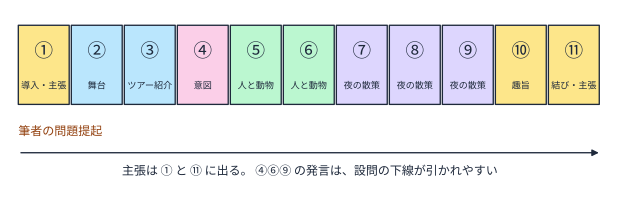
第①段落で、synanthropes(シナントロープ)がどんな動物として説明されているかを、日本語25字以内で書く問題。
語源から素直に読む:syn(共に)+anthropos(人間)=人間と共にいる動物。さらに、本文では「人間のすぐそばで暮らすよう適応した」生き物と説明され、私たちはこれらをしばしば害獣と見なす、と続く。
25字以内なので、「何に」「どう」「どんな動物」の3要素に絞る。
第①段落の空所A(文頭の接続的な語。選択肢は結果・強調・結論・逆接の4つ)と、空所B(me / them / us / you)を選ぶ問題。
A:前の文は「普通は害獣視する」、後ろの文は「だが、その生存に目を向けると見えてくるものがある」。前後で向きが逆になるので、逆接のYet。Consequently・Therefore(結果)、Indeed(強調)は前の内容を受けない。
B:「私たちが自分たちのために作るもの(景観や便利なごみ箱)は、誰にとって極めて重要なのか」。話題は動物。「自分たちのために作ったもの」が動物の生存を左右する、という流れなので、動物を指すthem。us だと「自分たちのために作ったものが自分たちに重要」という当たり前の内容になってしまう。
第②〜④段落の6か所の空所に、前置詞8つ(at / by / for / from / in / of / on / with)から選んで入れる問題。選択肢は文頭に来る語も小文字で、同じ語を何度使ってもよい。
6つとも、決まった言い回しで判断できる。
| 空所 | 言い回し | 答え |
|---|---|---|
| a | on + 特定の日の朝・晩(on an August evening) | 7 on |
| b | in + 様態(in groups) | 5 in |
| c | in the 19th century(世紀は in) | 5 in |
| d | armed with ~(~で武装して) | 8 with |
| e | the latest in a series(一連のうちの最新) | 5 in |
| f | learn from ~(~から学ぶ) | 4 from |
第②段落の下線部(あ)(Although で始まる1文)を日本語に訳す問題。
構文は Although 〔もともとの計画〕, 〔いまの姿〕。譲歩節は「もともと、田園風景を都会に持ち込んで人々の暮らしを良くするために計画された」、主節は「いまでは野生動物の避難所でもある」。主節の too(~も)を落とさない。
採点では、①although の対比、②計画の目的、③refuge for wildlife、④too、の4点が見られると考えられる。
第③段落のツアー名 “The Washing Bear” が、アライグマのどんな行動に由来するのかを、日本語25字以内で書く問題。
名前は、アライグマが食べ物を水で洗っているように見えることから。ただし本文は「実際は、敏感な手を濡らして食べ物を調べている」と続けて訂正している。問われているのは由来(見かけの行動)なので、訂正の部分は書かない。
第④段落の下線部(い)(「私たちは、this を…広い議論として開いて…」という趣旨の1文)を、this が何を指すかを明らかにして日本語に訳す問題。
this は、直前で語られた「都市の自然や、人間が生息環境を共有する動物(とくに人に嫌われがちな動物)についての見方を変えたい」という関心を受けている。訳に「この」と書くだけでは、問いに答えていない。
後半の show their side of the story は「動物たちの側の言い分を示す」。
第⑤段落の空所Cに、As a result / By contrast / Likewise / Nevertheless のうち最もふさわしい語を選ぶ問題。
前も後ろも「動物と関係を築く人間の例」。同じ種類の例を並べているので、Likewise(同様に)。By contrast(対照的に)や Nevertheless(それでも)は逆の内容に使う。As a result は原因・結果の関係がない。
第⑥段落で、アライグマがour little shadows(私たちの小さな影)と呼ばれる理由を、日本語70字以内で説明する問題。
発言の中身は3つ:①人間の世界と並行して存在する複雑な「影の世界」がある、②アライグマ独自の社会構造や関心がある、③人間の影響は受けるが、完全に独立している。
この3点を、「人間と並行する、独自の社会をもつ世界で暮らし、人間の影響を受けつつ独立しているから」とまとめる。70字以内なので、例(ごみ)は入れない。
第⑦段落の下線部(え)(街の騒音が「なくなっていた」という趣旨の文)を、gone を使わずに同じ意味になるよう英語で書き換える問題。
「街の騒音がなくなっていた」は、disappear(消える)、could no longer be heard(もう聞こえなかった)などで言い換えられる。
時制は元の文(過去)に合わせる。there は残す/残さないどちらでもよい。文法の誤りがないことを最優先にする。
第⑧段落(夜のごみ箱のそばで、ネズミやアライグマに出会う場面)を筆者が書いた目的を、5つの選択肢から選ぶ問題。
段落は、夜のごみ箱で餌をあさるネズミと、木の上で目を光らせるアライグマを観察した場面の描写。
| 選択肢 | 判定 |
|---|---|
| 昼の観光地の描写 | × 夜の話 |
| 動物が起こす問題の強調 | × 問題の話ではない |
| 夜の動物の行動の興味深い面 | ○ 場面の中身と一致 |
| 人間の活動が動物に好影響 | × 評価の話ではない |
| アライグマは敏感で社交的 | × ¶③・⑥の話 |
第⑨段落の下線部(お)(「少し違う時間に、少し違う心構えで行くだけで、すごいものが見られる」という趣旨の文)を、15語以内の英語で同じ意味に書き換える問題。
元の文の骨組みは「違う時間・違う心構え → 驚くべきものが見える」。different time / different attitude / reveal / something amazing の4つの要素を、動詞を替えて組み立てる。
語数を数える:Visiting at a different time with a different attitude may reveal something amazing. は13語で、制限内。原文の表現をそのまま使い回さないこと(言い換えになっていない)。
第⑩段落(サウンドウォークの意図をまとめた段落)の趣旨を、4つの選択肢から選ぶ問題。
段落の主語は「アーティストたち」で、述語はraise questions about our preconceptions(私たちの思い込みに疑問を投げかける)。人間が自然を変えてきた仕方(生態的な障壁、ごみの蓄積と除去)を問い直させる内容。
「人間の影響を忘れさせる」「人間の関与なしに起こる」の2つは、本文と逆向き。「実用的な方法を教える」は、本文の内容に出てこない。
第⑪段落の下線部(か)(田舎ではアライグマはこのような水辺で魚をとるだろうが、here では…という趣旨の文)を、here がどんな場所かわかるように日本語に訳す問題。
直前の文は、夜の散策が橋の上で終わったこと、橋の下には人工の湖があり、水道水から取られた小川で満たされ、アパートや高層ビルが水面に映っていることを述べている。
よって here =「水道水を水源とする、ビルが映る都会の人工の湖」。訳文に「ここ(=都会の人工の湖)」のように入れる。後半 human design has resulted in new animal behavior は「人間の設計が、動物の新しい行動を生み出した」。
第⑪段落の下線部(き)(「ごみとして捨てるものを、よく考えてみて。それは別の動物の次の食事かもしれない」という趣旨の文)に込められた筆者の懸念と主張を、本文の内容に基づいて40語以内の英語で説明する問題。
構成は2文:①懸念:人間が何気なく捨てるごみが、都市の動物の生存に関わっている(食べ物になる)ことに気づいていない。②主張:私たちは、自分が捨てるものが動物に与える影響を考えるべきだ。
解答例(34語):The author worries that people throw away trash carelessly, unaware that urban animals may live on it, and argues that we should think about how our daily waste affects the animals sharing our city.
| 設問 | 型 | 着眼点 |
|---|---|---|
| 問1・6・9 | 日本語の内容説明 | 字数に合わせて要素を絞る(定義/由来/理由) |
| 問2・3・8 | 空所補充(語) | 前後1文の論理関係(逆接・同様・指す対象) |
| 問4 | 前置詞 | 決まった言い回し(on + 晩、armed with、the latest in) |
| 問5・7・14 | 和訳 | 構文+指示語を具体的に言い換える |
| 問10・12・15 | 英語での記述 | 語数を数える/本文の語を使い回さない |
| 問11・13 | 段落の目的・趣旨 | 段落の主語と述語、方向が逆の選択肢を消す |
現代人の「忙しさ」を扱う評論です。設問は17問。選択問題が中心ですが、和文英訳(Q4・Q15)、英文和訳(Q5・Q10)、動詞の活用つき空所補充(Q11)、日本語40字(Q13)、英語20語以内(Q16)、80語の自由英作文(Q17)と、書く問題が重いのが特徴です。
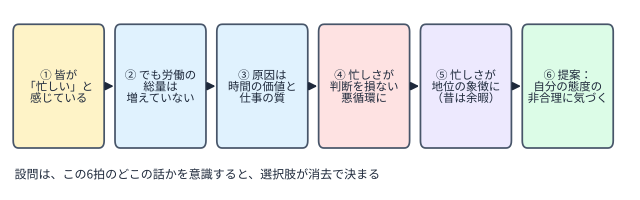
第1段落の下線(1)(「最も圧倒されている人は、そもそも聞かれていないかもしれない」という趣旨の文)で、筆者が何を言いたいかを5択(A〜E)から選ぶ問題。
直後の根拠:調査への参加を断る主な理由が「忙しすぎる」ことだという研究。つまり、「忙しい」と答えてくれる人の外側に、答えてさえいない、もっと忙しい人がいる。
よって、「過重だと感じている人の数は、調査が示す数よりさらに多いかもしれない」(D)。A(結果がばらつく)、B(回答が不正直)、C(誇張している)は、方向が逆または無関係。E は本文にない。
本文の4つの空所を、それぞれ選択肢から選ぶ問題。アは文の流れを決める句(4択)、イは「知識労働の時代には何が変わったか」(4択)、ウは副詞(4択)、エは「全部やる」ことの評価(5択)。
ア:直後の事実(総労働時間は増えていない)は、直前の「やることが増えたから」という推測を否定する。よって「But you’d be wrong」(D)。C の「実は逆だ」は、「やることが減った」という意味になり、過剰。
イ:前の文は「物には限度がある(収穫・材料)」。「しかし知識労働の時代には」と対比されるので、限度が外れた=「that’s changed」(B)。
ウ:「無限の世界に有限の人間が挑む」ことから生まれる結果。必然的に圧倒される(inevitably,B)。
エ:「ただ難しい、というだけでなく」の後ろは、さらに強い言い方。「数学的に不可能だ」(B)。C「難しいが達成可能」やE「楽にできる」は、方向が逆。
第3段落の下線(2)(過去50年の変化として、女性は無償労働を減らして有償労働を増やし、男性はその逆、という引用)の要点を、5択から選ぶ問題。(要確認)
引用が述べているのは、男女それぞれの有償労働・無償労働の配分が、50年で入れ替わるように変わったことで、総量は変わっていない、という点。
| 選択肢 | 判定 |
|---|---|
| A 仕事と性別に関する意識が時代とともに変わった | △ 配分の変化を述べる中で、最も近い |
| B 現在のデータは大きな性差の不均衡を示す | × 不均衡ではなく「総量は同じ」 |
| C 無償労働を含めると、女性のほうが多く働く | × 総量は同じと述べている |
| D 男性は賃金について女性より要求が多い | × 無関係 |
| E 賃金格差は、ほぼ解消された | × 無関係 |
本文は意識ではなく、仕事の配分の話だが、変化を述べている選択肢はAのみ。消去法でAとするのが妥当だが、出題者の意図が「変化した」にあるかの判断が分かれうるため、要確認としている。
第3段落の下線(3)(「さらに、データは、最も忙しいと主張する人々が概してそうではないことも示している」という趣旨の日本語)を英語に訳す問題。
構文は the data also show that + 節。節の中は「最も忙しいと主張する人々は、概して(そう)ではない」で、those who claim to be the busiest are generally not(最後の not は「忙しくない」の省略)。
「さらに」は Moreover / Furthermore、「概して」は generally / on the whole。「主張する」は claim。
第4段落の下線(4)(農業や製造業が中心だった昔の時代の労働について述べた文)を日本語に訳す問題。
前半:「農業や製造業が中心だった昔の時代、労働は確かに肉体的に過酷でありえた」。後半:「しかし、一定の限度には従っていた」。can certainly の certainly は「確かに~だが」という譲歩の形で、but と呼応する。
obey certain limits は直訳(限度に従う)でもよいが、「限度があった」と意訳すると自然。
第5段落の下線(5)(時間のプレッシャーに押しつぶされれば、いつも時計を気にして生きるのも無理はない、という趣旨の文)が何を意味するかを4択から選ぶ問題。
下線の意味は「強い時間的圧力のもとでは、当然、常に時間を気にするようになる」。C「重い時間的圧力のもとで暮らすと、人は自然と常に時間に注意を払う」が一致。
A(時間の圧力は減った)は、本文と逆。B(体が疲れて目が疲れる)は字面だけのひっかけ。D(人は驚く)は、hardly surprising の意味を取り違えている。
第5段落の下線(6)(「忙しいという感覚」の皮肉な結果についての1文)を日本語に訳す問題。
「『忙しい感覚』の皮肉な結果は、それほど急かされていない場合よりも、やるべきことのリストをうまくこなせなくなることだ」。
handle … less well than if we weren’t so rushed は「急かされていなければ(できるほど)うまくは扱えない」。than if ~ の仮定を、そのまま訳に入れる。
空所a〜gの7つに、リストの10個の動詞(apply / approve / impair / improve / kick / perceive / permit / prey / prioritise / run)から選び、必要なら形を変えて書く問題。同じ語は2回使えない。
確実なものから決める。
| 空所 | 言い回し | 答え(形) |
|---|---|---|
| a | prey on the mind(心にのしかかる)。主語が複数(feelings) | prey |
| b | thereby + -ing(分詞構文)で「判断力を損なう」 | impairing |
| c | prioritise A over B(A を B より優先する)。直前の taking on と並列 | prioritising |
| d | kick in(効き始める)。a vicious spiral は3人称単数 | kicks |
| e | does permit(強調の do + 原形) | permit |
| f | apply A to B(A を B に適用する)。tendency to + 原形 | apply |
| g | lie in + -ing(~することにある) | perceiving |
使わなかった動詞は approve・improve・run(ダミーの3語)。
第8段落で、趣味の写真を「共有」することが、それ自体の( )になってしまった、という文の空所オを、burden / opportunity / reward / solution から選ぶ問題。(要確認)
話の流れは「余暇にまで生産性の基準を持ち込むのは有害」。写真を共有することが目的化して、楽しみではなく負担になった、という方向。reward(見返り)や opportunity(機会)は、肯定的で流れに合わない。solution(解決策)も不自然。
第9段落の下線(7)(「真の名誉の印は余暇だった」と、ヴェブレンの言葉を引く文)について、どういう意味で余暇が「名誉の印」だったのかを日本語約40字で説明する問題。
直前の文:富、成功、社会的優位の究極のシンボルは、働かなくてよい自由だった。余暇をもてることが、地位の高さを示した、という意味。現代は逆に「忙しさ」が地位の印になっている、と次の文で対比される。
第10段落の、錠前屋のエピソードの空所カ(「顧客が本当に望んでいたのは( )だった。たとえ待ち時間が長くなっても」)を、4択から選ぶ問題。
腕が良くなり速くなったのに、客は不満になった。つまり客が欲しかったのは「錠前屋が時間と労力をかけている様子を見ること」。「待ち時間が長くなっても」とも合う(D)。
A(壊さないよう慎重に)は、昔の腕が悪い時代の話。B(チップを避ける)、C(確実に家に入れる)は、客が文句を言った理由と逆。
第11段落の下線(8)(「私たちはあまりにも頻繁に、他人に対してだけでなく自分自身に対しても、同じような態度を取ってしまう」という日本語)を英語に訳す問題。
骨組み:Too often, we take a similar attitude not only toward others but also toward ourselves.
「同じような態度」は a similar attitude。「他人に対して」「自分自身に対して」は前置詞を揃えて toward ~(または to ~)で並べ、not only … but also の A と B の形が並列になるようにする。
第11段落の下線(9)の that(「私たちが、立ち止まって…に気づくかもしれない」の中の that)が何を指すかを、20語以内の英語で説明する問題。
直前の文脈:私たちは、成果ではなく、どれだけ時間を「やること」に費やしたかで自分の価値を測り、忙しいことで自分を良く感じる。それを筆者は「理屈に合わない」と言っている。
that の中身=「成果ではなく、何をしたかの量で自分の価値を測るのは、筋が通らない」こと。解答例(17語):Measuring our worth by how much we do, rather than by what we achieve, makes no sense.
「あまりに忙しいと感じたとき、あなたはどう対処するか。何をして、それはなぜか」を、80語程度の英語で書く問題。本文の考えに触れなくてよい。
書き方の型(3文構成):①結論:何をするか、②具体:どのようにするか、③理由:なぜ効くか。
解答例(約80語):
| 設問 | 型 | 着眼点 |
|---|---|---|
| Q1・Q3・Q9 | 下線部の趣旨(選択) | 直後・直前の根拠文に戻る。方向が逆の選択肢を消す |
| Q2・Q6・Q7・Q8・Q12・Q14 | 空所補充(選択) | 論旨の6拍のどこか。「〜だけでなく」「しかし」などの合図 |
| Q4・Q15 | 和文英訳 | 骨組み(not only A but also B / the data show that ~)を先に決める |
| Q5・Q10 | 英文和訳 | 譲歩・仮定(than if ~)を訳に残す |
| Q11 | 動詞の選択+活用 | 言い回し(prey on / kick in / apply A to B)+語形(-ing・三単現) |
| Q13・Q16 | 説明(日本語40字・英語20語) | 直前の文の言い換え。字数・語数を数える |
| Q17 | 自由英作文 | 結論→具体→理由。簡単な文で、ミスなく |
解説を読んだあとの最終確認用です。記述問題は採点基準が非公開のため「解答例」とし、選択問題でも読みが割れうるものには「要確認」を付けています。
大問I(記述は解答例。「要確認」は判断が割れうる箇所)
大問I 記述(和訳・英訳・説明)
大問II(選択・空所)
大問II Q11(動詞を変形して記入)
大問II 記述
※ 答えはTMPSが自力で導いたものです(公開されている解答は参照していません)。語数・字数の制限は検算スクリプトで数え、選択肢・空所の対応も機械的に確認しています。意味の解釈や記述の出来は、スクリプトでは確かめられません。
採点したら → 30秒の得点診断へ2026年度の本番と同じ2大問・同じ小問構成(大問I=15問、大問II=17問)で、題材と設定を変えたTMPSオリジナル問題です。段落ごとの役割をつかむ読み方と、字数・語数を守って言い切る練習に使ってください。
印刷して本番と同じように90分で解けます。解答・解説はこのページの下に掲載しています。
※ 慶應義塾大学の入試問題ではありません。本文・設問・人物(架空)はすべてTMPS医学館が作成したオリジナルで、出典のある引用ではありません。
次の文章を読み、問いに答えなさい。(*印の語には注があります)
①Cities are built for people, but we are not their only residents. They are also full of small lives that we seldom notice. A, urban pollinators—bees, butterflies and hoverflies*—carry pollen from flower to flower even between the buildings, and without them many city gardens would give no fruit. Appreciating how they survive among the concrete can in turn show us how what we plant for ourselves—whether a park or a window box—can be of vital importance to B.
②(a) dawn on a cool Saturday in Osaka, after a night of rain that left the pavements gleaming*, I was one of about fifteen people who gathered (b) small groups outside a station and climbed the stairs of an old office building. Back (c) the 1970s, its roof had been a place to dump broken air conditioners; now it is covered with flower boxes, herbs and a row of white wooden hives. (あ) Although the garden was first created to make the roof more pleasant for office workers, it is now home to thousands of bees, too.
③Led (d) a beekeeper, we took part in a forty-minute tour about the honeybee. The tour is called “The Dancing Map,” a name that comes from how worker bees seem to dance for fun when they return to the hive, when in fact they are telling their sisters where to find flowers. This tour is the latest (e) a series of events run by the Rooftop Bee Club, a partnership between two local people: a primary-school teacher and a florist.
④“We wanted to change how people feel about insects in the city,” the teacher told me. “We were mainly interested in the small creatures that people tend to be afraid of. (い) We wondered how we could turn this into a bigger conversation and perhaps show the bees’ side of things.” For each tour, the two organisers study the insects closely, learning (f) beekeepers, scientists and the neighbours who live beside the hives.
⑤Although many city people dislike insects, others form friendships with them. One woman who lives beneath the roof has watched the hives from her window almost every day. C, she is so familiar with them that she has names for individual queens, such as “Hanako” for a particularly old one.
⑥“It is easy to see bees as simple honey machines,” said the florist, “but a hive has its own busy society, with jobs and rules of its own that we influence but cannot control.” Indeed, on “The Dancing Map,” she describes the bees as (う) “our small neighbours.”
⑦We had not yet seen a single bee leave the hive as we reached the far corner of the roof, a quiet space behind the water tanks. (え) There the hum of the wings was louder than the traffic, and now and then it was broken by the click of the beekeeper’s tools.
⑧Finally we reached the flower boxes, where the bees gather at the end of a warm morning. One bee was pushing deep into a tiny blossom, but there were no butterflies yet. Then, in the corner of a lavender bush, my camera caught the glint of a transparent wing.
⑨“We don’t take you to a secret place,” the florist said. “All the flowers you see are ones you could pass on any day. (お) Just looking more closely and more slowly can show you something remarkable.”
⑩Throughout the tour, the organisers raise questions about our assumptions about insects and how humans have changed the world around them, whether by planting gardens or by pouring concrete.
⑪The morning ended beside a small rooftop pond, fed by rainwater from the building’s roof, with the glass towers of the business district reflected in its surface. (か) In the countryside, bees would drink at ponds like this; here, human design has created a new place for them to live. The Rooftop Bee Club asks that we notice our part in this shared city, and perhaps (き) think twice about what we plant: it could be another creature’s next meal.
*hoverfly:a small flying insect that looks like a bee and feeds on flowers *gleam:shine brightly, especially with reflected light
問1 パラグラフ①では urban pollinators はどのように説明されているか、日本語25字以内で書きなさい。
問2 パラグラフ①の空欄 A に入るのに最もふさわしい語句はどれか、選択肢から選んで、その番号を解答欄に書きなさい。
問3 パラグラフ①の空欄 B に入るのに最もふさわしい語はどれか、選択肢から選んで、その番号を解答欄に書きなさい。
問4 パラグラフ②〜④の空欄 (a) 〜 (f) に入れるのに最もふさわしい語を選択肢から選んで、その番号を解答欄に書きなさい。なお、選択肢は文頭にくる語もすべて小文字で始めてあり、同じ語を複数回使用してよいものとする。
問5 パラグラフ②の下線部(あ)を日本語に訳しなさい。
問6 パラグラフ③によると、“The Dancing Map” というツアー名は、ミツバチのどのような行動に由来しているか、日本語25字以内で書きなさい。
問7 パラグラフ④の下線部(い)を this が何を指すかを明らかにして日本語に訳しなさい。
問8 パラグラフ⑤の空欄 C に入るのにふさわしい語句はどれか、選択肢から選んで、その番号を解答欄に書きなさい。
問9 パラグラフ⑥の下線部(う)について、ミツバチをなぜこのように呼ぶのか、日本語70字以内で説明しなさい。
問10 パラグラフ⑦の下線部(え)を louder を使わずに同じ意味になるように英語で書き換えなさい。
問11 パラグラフ⑧をこの記事の筆者が書いた目的は何か、選択肢から選んで、その番号を解答欄に書きなさい。
問12 パラグラフ⑨の下線部(お)を15語以内の英語で同じ意味になるように書き換えなさい。
問13 パラグラフ⑩の趣旨は何か。選択肢から選んで、その番号を解答欄に書きなさい。
問14 パラグラフ⑪の下線部(か)を here がどのような場所を指しているかが分かるようにして、日本語に訳しなさい。
問15 パラグラフ⑪の下線部(き)には、筆者のどのような懸念と主張が込められていると考えられるか、本文の内容に基づいて40語以内の英語で説明しなさい。
問1 花から花へ花粉を運ぶ、都会に暮らす小さな生き物。
①に書かれている定義をそのまま拾う。bees, butterflies and hoverflies が「花から花へ花粉を運ぶ」という説明。
問2 1
直前は「都市には気づかれにくい小さな命がいる」という一般論、直後は花粉を運ぶ昆虫という具体例。For example。However / Nevertheless は逆接、As a result は因果で、どれも合わない。
問3 2
in turn(今度は逆に)がヒント。「私たちが自分のために植えるものが、彼ら(=送粉者)にとって重要になりうる」。主語の側の人間(us)ではなく、前文の urban pollinators を受ける them。
問4 a=1, b=5, c=5, d=2, e=5, f=4
(a) at dawn(時刻)、(b) in small groups(形態)、(c) back in the 1970s(年代)、(d) led by(受け身の行為者)、(e) the latest in a series(連なりの中の一つ)、(f) learn from(学ぶ相手)。
問5 その庭は、もともとは事務所で働く人々にとって屋上をより快適にするために作られたが、今ではたくさんのミツバチの住みかにもなっている。
Although〜, ... の譲歩構文。「もともとは〜のために作られた」「今ではミツバチの住みかでもある」の対比を訳に出す。too は「ミツバチもまた」。
問6 巣に戻った働きバチが遊びで踊るように見える行動。
a name that comes from … の直後にある、働きバチが巣に戻ったときの行動を拾う。「遊びで踊るように見える」+「実際は花の場所を伝えている」のうち、名称の由来になっているのは前者。
問7 私たちは、人々が怖がりがちな小さな生き物のこと(怖がられている現状)を、どうすればもっと大きな議論にでき、ミツバチの側の事情も示せるだろうかと考えた。
this は直前の文(人が怖がりがちな小さな生き物に関心がある、という状況)を受ける。how we could turn this into a bigger conversation(これをどうやって大きな議論にするか)と side of things(〜の側の事情)を訳し落とさない。
問8 1
窓から毎日観察している → ゆえに個体の名前まで付けるほど親しい、という因果。As a result。By contrast と Nevertheless は逆接、Likewise は「同様に」で内容がかみ合わない。
問9 人間と同じ街に隣り合って暮らし、独自の仕事や規則をもつ忙しい社会をつくっていて、人間の影響は受けるが人間には支配できないから。
直前の“a hive has its own busy society, with jobs and rules of its own that we influence but cannot control”が理由の中身。「隣人(neighbours)」と呼ぶ根拠は、同じ街に暮らす点と、独自の社会をもつ点。
問10 There the traffic was quieter than the hum of the wings.
louder を使わず、主語を入れ替えて quieter を使う。the hum of the wings was louder than the traffic = the traffic was quieter than the hum of the wings。比較の向きに注意。
問11 3
⑧の内容は、一匹の蜂が花に頭を入れる様子、透明な羽の光など、庭での蜂の細かな様子。目的は選択肢3。ハチミツの販売や、屋上の憩いの場の説明は書かれていない。
問12 If you look carefully and slowly, you may notice something wonderful.
「より近く、よりゆっくり見ることが、驚くべきものを見せてくれる」= 無生物主語を、人を主語にした If 節にほどく。15語以内を守る。
問13 3
⑩は「虫についての思い込みを問い直す」と「人間が周りの世界を変えてきたこと」の2点。1は“without human involvement”が逆、2は“removing insects”が逆、4は“forget”が逆。3。
問14 田舎ならミツバチはこのような池で水を飲むが、ここ、つまり都会のビルの屋上では、人間の設計がミツバチの新しい住みかをつくり出した。
In the countryside ..., here ... の対比。here は「都会の屋上の池(人がつくった場所)」。human design が主語になっているので、「人間の設計がこの場所をつくった」と訳す。
問15 The author is concerned that people plant gardens without thinking about the insects that depend on them, and argues that we should choose plants carefully because they may feed other creatures.
think twice about what we plant(植えるものをよく考えよ)が主張、it could be another creature’s next meal(他の生き物の食べ物になる)が理由・懸念。「懸念+主張」を1文ずつ、40語以内で。
※ 日本語・英語の記述は「解答例」です。意味が合っていれば別の言い回しでも構いません。
次の文章を読み、問いに答えなさい。
Few things about modern shopping seem more obvious than the idea that more choice is better. Walk into any large supermarket and you will find dozens of kinds of bread and hundreds of kinds of cheese. And (1) it is possible that the most confused shoppers never appear in the statistics at all: according to one small survey, a common reason people give for leaving a shop with nothing is…that they could not decide.
You might assume the explanation is straightforward: we are happier when we can find exactly what we want. ア. A wider range of options often leaves people less satisfied with what they finally choose. Shoppers today spend far longer comparing products than shoppers did a generation ago. (2) “The main finding is that people with more options spend a lot more time deciding and a lot less time enjoying what they chose,” says a consumer researcher at a business school. But “the amount of money they spend is pretty much exactly the same.” (3) さらに、調査は、最も多くの選択肢があると感じている人ほど、結局は最初の選択に戻ることが多いことも示している。
What is going on? Part of the answer is simple arithmetic. As the number of options grows, the number of possible comparisons grows even faster, and so does the chance that we will imagine something better that we could have picked. But it is also a result of how shopping itself has changed. (4) In earlier eras, when shops were small and sold mostly local goods, choosing could certainly be tiring—but it ended when the shelves ended.
But in the age of online shopping, イ. We live in an “endless aisle,” as one retail analyst puts it. There is always another product, another review, another discount, and a few more clicks mean you can easily compare another dozen items at home, on holiday, or on the train. The result, ウ, is feeling stuck: we are each limited human beings, with limited time and attention, trying to judge an unlimited number of options. We feel a social pressure to make “the best choice,” at home and at work, but that is not just really difficult; エ.
(5) With so many alternatives pulling at us, it is hardly surprising that we keep one eye on the choices we did not make. But psychological research suggests that this kind of regret actually lowers satisfaction (not to mention making us slower). So (6) the ironic result of having more choice is that we enjoy what we pick less than if we had been offered fewer options. Psychologists describe this as a problem of “mental load”: worry and doubt (a) on the mind, thereby (b) judgment. When you are overwhelmed, you are more likely to choose badly—agreeing to things you do not want, or (c) hours to trivial details instead of what matters. A vicious circle (d) in: your worry about choosing leaves you even more overwhelmed than before.
Arguably worst of all, this mindset (e) into our free time—so that even a quiet evening can (f) into hours of comparing reviews and ranking things, as if leisure itself should be “efficient.” “The most harmful thing is this habit of applying ratings to parts of life that should, by their nature, be free of them,” argues a food writer who runs a popular cooking blog. She watched it happen to her own hobby. “I used to cook for friends just for fun,” she says. “But now the posting and rating has become its own オ.”
If there is a solution to the problem of too much choice, other than a limit on how many products a shop may sell, it may lie in (g) in mind just how little the “perfect” choice matters. Historically, the clearest sign of wealth was having plenty to choose from: (7) a table with many dishes, a wardrobe with many coats, was proof that a household could afford to be picky. Now, the sheer number of options is available to nearly everyone, and its value has fallen.
To see how odd it is to value sheer variety, consider a story about a baker. Early in her career, the baker “was not very good at it: the loaves were often too dark, and she was slow.” Still, customers were happy to pay and to leave a small tip. As she got better and faster, though, they complained about the price and stopped tipping. You would think they would value fresh bread on the table sooner. But what they really wanted was カ—even if it meant a longer wait. (8) 私たちは、商品だけでなく、自分の人生までも、選択肢の数で評価してしまいがちだ: we measure the worth of a life not by what we choose but by how many doors we keep open. We live restless lives, at least in part, because keeping every option open makes us feel safe. To put it mildly, this makes no sense. Perhaps we would stop long enough to see (9) that—if we were not so afraid of missing out.
Q1 Regarding the underlined part marked (1), what is the author’s point? Select the most suitable option from A〜E and mark the letter on your answer paper.
Q2 Select the most suitable option from A〜D to fill the space marked ア. Mark the letter on your answer paper.
Q3 What is the main point of the underlined part marked (2)? Select the most suitable option from A〜E and mark the letter on your answer paper.
Q4 Translate the underlined sentence marked (3) into English.
Q5 Translate the underlined sentence marked (4) into Japanese.
Q6 Select the most suitable option from A〜D to fill the space marked イ. Mark the letter on your answer paper.
Q7 Select the most suitable option from A〜D to fill the space marked ウ. Mark the letter on your answer paper.
Q8 Select the most suitable option from A〜E to fill the space marked エ. Mark the letter on your answer paper.
Q9 Regarding the underlined sentence marked (5), what does the author mean? Select the most suitable option from A〜D and mark the letter on your answer paper.
Q10 Translate the underlined sentence marked (6) into Japanese.
Q11 Select the most suitable verb from the list below to fill each of the spaces marked (a)〜(g). Change the form of the verb where necessary, and write your answers on the answer paper. Do not select any of the words more than once.
bury cloud devote drift keep
lend melt set spread weigh
Q12 Select the most suitable option from A〜D to fill the space marked オ. Mark the letter on your answer paper.
Q13 Regarding the underlined part marked (7), in what sense was “plenty to choose from” a sign of wealth? Explain in Japanese in about 40 characters.
Q14 Select the most suitable option from A〜D to fill the space marked カ. Mark the letter on your answer paper.
Q15 Translate the underlined part marked (8) into English.
Q16 What does the underlined word marked (9) refer to? Explain in English in under 20 words.
Q17 When you have too many things to choose from, how do you decide? Write about 80 words in English to explain what you do and why. In your answer, you do not need to refer to the ideas in the passage.
Q1 B
survey によれば、買わずに店を出る一番の理由は「決められない」。つまり、いちばん迷った買い物客は購入の数字に出てこない。数字より実際は多い、という筆者の指摘はB。
Q2 C
直前は「欲しいものが見つかるほど幸せ」という予想、直後は「選択肢が広いと満足度が下がる」。予想と反対なので C。
Q3 C
引用の中身は「選択肢が多い人は決めるのに時間をかけ、選んだものを楽しむ時間は短いが、使うお金はほぼ同じ」。C。
Q4 Moreover, the survey also shows that people who feel they have the most options often end up returning to their first choice.
「さらに」= Moreover / In addition。「最も多くの選択肢があると感じている人ほど」は those who feel they have the most options。「結局は〜に戻る」は end up returning to。
Q5 昔の時代、店が小さく、売っているのも主に地元の品物だったころは、選ぶことはたしかに疲れることがありえたが、それも棚が終われば終わりだった。
In earlier eras, when ..., choosing could certainly be tiring—but it ended when the shelves ended. 「棚が終われば終わる」ことが、直後の endless aisle(終わりのない通路)との対比。
Q6 C
直前の「昔は棚が終われば選ぶのも終わった」との But の対比。オンラインでは際限がない。直後の“endless aisle”が決め手で、C。
Q7 B
「結果として、行き詰まる感覚になる」。its の挙動を予測できる結果として predictably。rarely は頻度の副詞で意味が合わない。
Q8 C
“not just really difficult; [ ]” の後ろには、より強い内容(difficult より強い)が来る。C(不可能に近い)。
Q9 A
“keep one eye on the choices we did not make” = 選ばなかった選択肢が気になる。A。
Q10 「選択肢が多いこと」の皮肉な結果は、提示された選択肢が少ない場合よりも、選んだものを楽しめなくなることである。
ironic result(皮肉な結果)、than if we had been offered fewer options(仮定法過去完了)の比較を訳す。
Q11 a weigh, b clouding, c devoting, d sets, e spreads, f drift, g keeping
(a) worry and doubt weigh on the mind(心に重くのしかかる)/(b) thereby clouding judgment(判断を曇らせる)/(c) devoting hours to ... (時間を費やす)/(d) A vicious circle sets in(悪循環が始まる)/(e) this mindset spreads into our free time(広がる)/(f) can drift into hours of ...(いつの間にか〜になる)/(g) keeping in mind(心に留める)。bury, lend, melt は余り。
Q12 B
「投稿して評価することが、それ自体〜になった」。楽しみだった料理が、いつの間にか負担になったという流れ。reward(楽しみの対極)、gift、secret は合わない。
Q13 多くの料理や服から選り好みできるのは、経済的に余裕のある家だけだったという意味。
皿が多く、コートが多い = 選り好みできる余裕がある = 経済力の証明。40字ほどにまとめる。
Q14 B
売り手の努力が見える方が、客は価値を感じるという話。パン屋が上達して速くなったら、チップが減った。つまり客が望んだのは、手間と時間をかけている姿 = B。
Q15 We tend to judge not only products but also our own lives by the number of options.
コロン以降が後半の説明なので、日本語は「〜しがち」の評価の仕方を言い切る。not only A but also B と、judge … by the number of options。
Q16 Judging a life’s worth by how many options we keep open makes no sense.
that の中身は、直前の2文。「選択肢を開けておくから安心する」→「それはおかしい」。“makes no sense” を使い、20語未満で。
Q17 When I have too many choices, I first decide what matters most to me, such as price, time or taste. Then I remove everything that does not fit and look at only two or three options. I do this because comparing everything makes me tired and unhappy. After I choose, I try not to look at the other options again. Even if my choice is not perfect, I can enjoy it and move on to the next thing.
採点の目安:(1) 立場を最初に言い切る、(2) 理由を1つ以上、(3) 80語前後(75〜85語)。文法の誤りは1か所で大きく減点されるため、短い文でつなぐ。
※ 和訳・英訳・自由英作文は「解答例」です。意味が合っていれば別の言い回しでも構いません。
本番の過去問、またはそっくり類題セットを90分で解いた結果を選んでください。次にやるべきことを表示します。
TMPSのおすすめは I(38分)→ II(52分)→ 語数・字数の数え直し の順です。大問IIのQ17(自由英作文)は、時間が残ったら書くのではなく先に12分を確保しておきます。
分かります。著作権に配慮して問題本文・図は掲載していませんが、各小問の最初に「どういう問題か」として、設定・何を求めるか・答え方をTMPSの言葉で説明しています。
2026年度と同じ2大問・同じ小問構成(15問+17問)で、題材を変えたTMPSオリジナル問題です。全問の解答・解説をこのページに掲載し、本番形式の問題冊子PDFも無料で配布しています。
公開されている解答は参照せず、TMPSが自力で導いた答えを確認しています。語数・字数の制限と、選択肢・空所の対応はスクリプトで数えて確かめていますが、和訳・英訳・自由英作文の出来は機械では確かめられないため、ページ内に「解答例」「要確認」と明示しています。誤りを見つけた場合は、公式LINEからお知らせください。
公式LINEからお知らせください。確認のうえ修正し、更新日を記載します。
問題等で誤りを発見された場合、修正しますので、TMPS医学館までLINEを下さい。
受験生・指導者の皆様からのご指摘を真摯に受け止め、最も信頼できる過去問解説・類題ライブラリーとして随時アップデートいたします。
「どこで時間を失ったか」「どの問題を後回しにすべきだったか」「記述のどこで減点されるか」を、Mio先生があなたの答案から直接診断します。