Mio先生の医学部英語道場 金沢医科大 英語2025
2025年度 一般選抜 前期 全3大問・40問発音は辞書で機械検算そっくり類題セット

金沢医科大学
医学部 英語
2025年度 解答・解説

問題文は掲載できませんが、
解説を読むだけでどんな問題かもわかる!

さらに、そっくり類題PDFを見れば、実際の問題イメージもわかるよ!

各設問を「どういう問題か」から説明し、考え方を1行も飛ばさずに解説。最後に、本番と同じ3大問の構成で作ったそっくり類題セット(全問解答つき)で、2025年度を丸ごと演習できます。

Mio先生
解説:Mio先生・ニックニ先生(TMPS医学館) / 更新:2026.10.17 / 読了 約25分

📌 このページの使い方

  1. 過去問集をお持ちの方:本番と同じ60分で解き、答え一覧で採点してから解説へ
  2. お持ちでない方:各設問の「どういう問題か」を読めば、問題の中身がそのまま分かります
  3. 最後にそっくり類題セット(PDF版あり)を60分で解き、初見でも同じ解き方ができるか確かめる

※ 著作権に配慮し、入試問題の本文・図は掲載していません。解答番号は、本番の解答欄との対応を示すためのものです。※ 答えはTMPSが自力で導いたもので、公式の解答は参照していません。発音問題は発音辞書で機械的に照合しています。

⚠️ 問題等で誤りを発見された場合、修正しますので、TMPS医学館までLINEを下さい。(迅速に確認・更新いたします)

LINEで誤りを連絡
SUMMARY

3分で分かる 2025年度の金沢医科大の英語

Yuiちゃん
Yuiちゃん
60分で40問で、長文が3つもあると、時間が足りなさそうです…。
Mio先生
Mio先生
大丈夫。各大問の前半は文法・語彙・発音で、本文を最後まで読まなくても解ける問題が多いの。そこを先に取れば、内容問題に時間を回せるよ!
ニックニ先生
ニックニ先生
空所や発音は1問30秒を目安にしてください。15・31のような「音節」「主動詞」の問題も、本文を読み直さずに答えられます。
STRATEGY MAP

60分の立ち回りマップ

時間はTMPSの目安です。解く順番と「先に取る問題」をセットで覚えておきましょう。

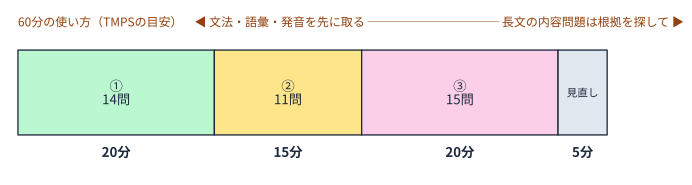
60分の時間配分。大問①20分、大問②15分、大問③20分、見直し5分
図A 60分の使い方(TMPS作成)
🧭 おすすめの解く順番
大問①の空所・発音 → 大問①の内容 → 大問② → 大問③の空所・主動詞 → 大問③の内容・グラフ → 見直し5分
長文は先に設問を眺め、本文は設問ごとに根拠の1〜2文を探します。「2つ選ぶ」「NOT」は、確実に違う選択肢を消してから残りを本文で確認しましょう。
大問① / 目標:20分(14問・解答番号1〜14)

大問① 家庭の低廃棄の暮らし ── 2文目の「That / then / these」から欠けた文を逆算する

長文(約700語)のあとに、欠けた文の補充(1〜3)・指示語(4)・語法の空所(5〜8)・発音(9・10)・内容(11〜14)の計14問が並びます。

現場戦略試験会場でのリアルな立ち回り(大問①)
⏱ 目標時間 & 死守ライン目標20分。空所と発音(1〜10)に8分、内容問題(11〜14)に9分、見直し3分。
⚠️ 損切り・警戒ライン1〜3で迷ったら、2文目の書き出し(That / then / these)を見て、前の文に必要な内容を日本語で言い換える。2分以上かけない。
💡 初手の思考トリガー1〜3は2文目の冒頭の語、5〜8は空所の前後のかたまりから決める。
Yuiちゃん
Yuiちゃん
欠けた文の問題は、5つとも入りそうに見えます…。
Mio先生
Mio先生
2文目の最初の1語を見て!「That」なら数字、「then」なら最初にしたこと、「these」ならその名詞が前にあるはず。それを日本語で言い換えてから選択肢を見ると、すぐ絞れるよ。
ニックニ先生
ニックニ先生
NOT問題の12は、本文に出てくる活動に1つずつ○を付けます。「パートタイム」のような語に釣られないでください。

1〜3欠けた文の補充:第1〜3段落の1文目

📝 どういう問題か?

家庭の「低廃棄の暮らし(low-waste living)」についての長文。第1〜3段落の1文目が抜けている。5つの文(ごみの量・インタビュー・輸出・リサイクルの自負・有機ごみ)から、各段落に最も合うものを選ぶ。

  • 解答番号:1・2・3(共通の5つの選択肢①〜⑤から、段落ごとに1つ)
  • 5つの文のうち、2つは使わない

2文目の書き出しにある「That」「then」「these」を手がかりにするのが鉄則。2文目が前の文の内容を受けているので、そこから逆算できる。

1=③:第1段落の2文目は「That places the sector on nearly the same level of waste as 〜」。That が受けるのは具体的な量なので、「オーストラリアの家庭は毎年約1,200万トンのごみを出す」という③。「家庭の部門が製造業・建設業と同じ水準」という比較は、量の数字があって初めて成り立つ。

2=⑤:第2段落の2文目は「We then invited them to design 〜」。then(そのあと)の前には、最初にしたことが必要。「まず住民に、いまのごみ処理の習慣をインタビューした」という⑤が入る。

3=②:第3段落の2文目は「When China stopped these imports in 2018 〜」。these imports(これらの輸入)が指す先が前に必要で、「オーストラリアは長年、廃棄物を再資源化用に輸出していた」という②。①(自国のリサイクルは世界最高だという人もいる)と④(有機ごみの管理のため家庭がリサイクルを始めた)は、どの段落の流れにも合わない。

🎯 1〜3 の答え
1:③2:⑤3:②

4指示語:they は何を指すか

📝 どういう問題か?

第3段落の「循環型経済では、資源は価値あるものとされ、システムを巡るあいだ継続的に再利用される」という文の下線部(1)they が指す語句を、10個の選択肢(国・輸入・政策・経済・資源・システムなど)から選ぶ。

  • 解答番号:4(10個の選択肢から1つ)

下線の they を、動詞 cycle の主語として読める名詞に置き換えてみる。直前の主語はResources(⑥)で、「資源が(システムを)循環する」と読める。

近くの名詞(the system や the shifting phase)は、「循環する」ものにならない。China や imports は前の文の話題で、「循環の中で再利用される」ものではない。

🎯 4 の答え
4:⑥

5〜8語法の空所:文のかたまりに合う語句を選ぶ(4問)

📝 どういう問題か?

本文中の4か所の空所に入る語句を、それぞれ5つの選択肢から選ぶ。5は前置詞的なつなぎ、6は句動詞、7は分詞、8は名詞。

  • 解答番号:5〜8(各5択)

5=④ rather than:「バルク店まで余分に歩くことを、近くのスーパーの楽な選択肢を取ることよりも」と、2つの行動を比べている。「A rather than B」(BよりむしろA)。as though は節を従え、in regard to は「〜に関して」、as far as は「〜に関する限り」、similar to は「〜に似た」で、いずれも文脈に合わない。

6=① came up:「子どもがいる家庭で食品ロスを減らす難しさも、話に出てきた」。come up=(話題・問題が)持ち上がる。brought up は目的語が必要で、「子どもを育てる」の意味にもなるが、受け身でないと主語に合わない。picked up / set up / stood up も合わない。

7=④ noting:「one participant noting, “…”」=「ある参加者が〜と述べているように」。with + 名詞 + -ingの付帯状況で、参加者が「述べる」側だから現在分詞。noted は受け身(述べられた)になってしまう。has noted は with の後ろに置けない。

8=① legislation:「高廃棄の業者に(義務を課す)法律を通す」。pass legislation on 〜=〜に関する法律を成立させる。association(協会)・assumption(仮定)・section(部門)・determination(決意)は pass の目的語として合わない。

🎯 5〜8 の答え
5:④6:①7:④8:①

9・10発音問題:下線の語の「最も強く読む母音」と同じ発音の語

📝 どういう問題か?

本文中の下線を引いた2語(alternatives / substantial)について、最も強く読まれる母音を見つけ、12語のWord Boxから同じ母音の語を1つずつ選ぶ。

  • 解答番号:9・10(Word Boxの番号を選ぶ)
  • Word Boxの12語は、どれも母音が異なる(rat / pain / here / floor / cut / hit / heart / put / fair / bird / tool / kind)

9 alternatives = ⑩ bird。al-TER-na-tives と、強勢は2番目の音節 ter(/ɜːr/)にある。bird と同じ。最初の al(/ɔːl/)は強く読まないので、floor(④)にしない。

10 substantial = ① rat。sub-STAN-tial と、強勢は stan(/æ/)。rat と同じ。「a の文字だから pain や fair」とは決めつけない。

検算:2語とも、発音辞書(CMU)の主強勢の母音と、Word Boxの12語のうち1語だけが一致することをスクリプトで確かめた。

🎯 9・10 の答え
9:⑩10:①

11推論:REDcycle(ソフトプラスチックの回収事業)の失敗について

📝 どういう問題か?

政府が運営するソフトプラスチックの回収事業が、リサイクルの約束を果たせず停止されたと述べる段落がある。その失敗について推測できることを5つの文から選ぶ。

  • 解答番号:11(①〜⑤から1つ)

本文は「その事業は過負荷(overloaded)になり、数か月間、約束どおりにリサイクルできていなかったことが明らかになった」と述べる。ここから言えるのは③「集まった量に事業が押しつぶされた」。

①「オーストラリア人が参加したがらなかった」は、むしろ家庭は回収に協力していた(量が多すぎた)ので逆。②(客がうまくリサイクルできる案内がなかった)、④(政府の規制のせいで費用が高すぎた)、⑤(地域の支援が足りなかった)は、本文に根拠がない。

🎯 11 の答え
11:③

12NOT:参加者が試した家庭内実験として述べられていないもの

📝 どういう問題か?

参加者が行った家庭内の実験として、本文に書かれていないものを7つから選ぶ。

  • 解答番号:12(①〜⑦から1つ)

本文に出る実験:①6週間ごみゼロを目指す母親(①)、②プラスチックを使わない料理(②)、③バルク店での買い物(③)、④庭づくり(④)、⑤服と自転車の修理(⑤)、⑥友人向けの3週間の低廃棄チャレンジ(⑥)。⑦「パートタイムのリサイクル事業を始める」は書かれていない。

NOT問題のコツ:先に6つに○を付けて、残った1つを選ぶ。⑥は「チャレンジを作った人はパートタイムの販売員」とあり、「パートタイム」という語に引きずられて⑦を本文にあると思い込まないこと。

🎯 12 の答え
12:⑦

13内容:参加者の体験を最もよく表す文

📝 どういう問題か?

家庭内実験を終えた参加者の感想として最もふさわしい文を、5つの文から選ぶ。

  • 解答番号:13(①〜⑤から1つ)

本文は「参加者は、家庭での変化は非常に大変だと感じた」「変化はいつも定着するわけではなかった」と述べる。③「低廃棄の習慣を続けるのは難しいと感じた」が合う。

①(単純で楽しい)は反対。②(家庭に義務づけるべき)④(続けるには報酬が必要)⑤(ある習慣は役に立たないと結論づけた)は本文にない。

🎯 13 の答え
13:③

14主旨:本文全体のまとめ

📝 どういう問題か?

本文全体の主旨を5つから選ぶ。

  • 解答番号:14(①〜⑤から1つ)

最終段落は「循環型経済への移行を成功させるには、家庭での暮らしの視点から計画する必要がある」「低廃棄の暮らしには、政策や産業界の変化が必要」と述べる。両方を含むのは② 低廃棄の暮らしへの移行には、制度の変化と家庭レベルの変化が必要。

①(家庭が主な責任を負う)は言い過ぎ。③(地域のリサイクルが実用的)は部分的で、④(政策立案者と企業は十分にしている)は本文と反対。⑤(循環型経済は政府の非効率で実現できない)も本文にない。

🎯 14 の答え
14:②
ニックニ先生の総整理表

大問①:設問タイプ別の着眼点

型解答番号着眼点
欠けた文の補充1〜32文目の That / then / these から、前の文に必要な内容を逆算する
指示語4動詞の主語として読める名詞に置き換える
語法の空所5〜8rather than・come up・with+名詞+-ing・pass legislation のかたまり
発音9・10強勢の位置→母音→Word Box(alternatives は2番目の音節)
推論・NOT・内容・主旨11〜14本文の根拠を指せない選択肢を消す。NOTは先に○を付けて残りを選ぶ
TMPSコーチング診断

🩺【自己診断】大問①で手が止まった人への処方箋

  • 1〜3欠けた文が決まらない → 2文目の冒頭語から、前の文に必要な内容を日本語にしてから選ぶ
  • 5〜8語法で迷う → 空所の前後を声に出して、かたまり(rather than など)で覚えているかを確かめる
  • 9・10発音を間違える → 強勢の位置を辞書で確認し、母音だけをWord Boxの語と照らす
  • 11〜14内容で迷う → 本文の根拠を指せない選択肢・言い過ぎの選択肢から消す
大問② / 目標:15分(11問・解答番号15〜25)

大問② デジタル医療 ── 前半の文法・語彙は30秒で、「目的」と「主旨」は根拠の1文を探す

長文(約700語)のあとに、強勢の音節(15)・語義(16・17)・語法の空所(18〜20)・内容(21〜25)の計11問です。三つの大問のうち、問題数が最も少ないので、ここで時間を余らせるのが理想です。

現場戦略試験会場でのリアルな立ち回り(大問②)
⏱ 目標時間 & 死守ライン目標15分。前半の文法・語彙(15〜20)に5分、内容問題(21〜25)に9分、見直し1分。
⚠️ 損切り・警戒ライン22(なぜ触れたか)・24・25で迷ったら、該当する段落の1〜2文だけに戻る。全文を読み直さない。
💡 初手の思考トリガー空所18〜20は品詞と、後ろに続く形から決める。内容問題は、「第◯段落」の指定があれば、その段落だけを読む。
Yuiちゃん
Yuiちゃん
「なぜ〜に触れたか」の問題は、どう考えればいいですか?
Mio先生
Mio先生
その例が出てくる前後の1文を読むの。「すでに〜している」のあとにドローンの例が続いているから、「技術がすでに役に立っている例」だと分かるよ。
ニックニ先生
ニックニ先生
主旨の25は、導入の話(コロナ禍)や、一例(ウェアラブル)だけを選ばないでください。本文全体を一言で言う文を選びます。

15強勢のある音節:facilities

📝 どういう問題か?

本文中の下線の語 facilities を音節に分けた fa-cil-i-ties(①〜④)のうち、最も強く読む音節を選ぶ。

  • 解答番号:15(①〜④から1つ)

facilities はfa-CIL-i-tiesと、2番目の音節 cil に強勢がある。最初の fa は弱く読む。名詞の語尾 -ity(-i-ties)は、その直前の音節に強勢が置かれる語が多い。

検算:発音辞書(CMU)で、主強勢が2番目の音節にあることを確かめた。

🎯 15 の答え
15:②

16・17語句の意味:本文中で最も近い言い換え(2問)

📝 どういう問題か?

下線の語句 eliminating(16)と equipped with(17)について、本文中の意味に最も近いものを5択から選ぶ。

  • 解答番号:16・17(各5択)

16 eliminating = ② removing。「診療所に行く必要をなくす」。dividing(分ける)・confronting(立ち向かう)は文脈に合わない。

17 equipped with = ① furnished with。「(機器を)備えている」。every health worker is equipped with a device=すべての医療従事者が機器を備えている。offered by・assigned by は、備える側(by)を表す語で、「備えている」の意味ではない。

🎯 16・17 の答え
16:②17:①

18〜20文法・語法の空所:分詞・動詞の選択(3問)

📝 どういう問題か?

本文中の3か所の空所に入る語句を、それぞれ5つの選択肢から選ぶ。18は「どこにいる」を表す形、19は「〜を受け入れる」の意味の動詞、20は「〜から解放する」の意味の動詞。

  • 解答番号:18〜20(各5択)

18=② located:「医師や医療従事者から、世界のどこにいる人でも治療を受けられる」。a doctor or healthcare professional + 過去分詞(located anywhere in the world)=「世界のどこかに所在する」と名詞を後ろから修飾する。locate は他動詞(〜の場所を見つける)、to locate は目的の意味、in location / location of は名詞で、ここでは文法的に合わない。

19=⑤ accepted:「アジアの多くの国の市民は、政府が個人データを使うことを進んで受け入れた」。accept + 動名詞(their governments having access)の形。submitted(提出した)・presented・demanded・applied は、後ろの形と意味の両方が合わない。次の文の「ヨーロッパでは分散型の仕組みが好まれた」と対比になっている。

20=⑤ free:「医師を、日常的な仕事から解放し、人と人との質の高いやり取りに集中させる」。free A from B。次の文の「これにより医師は〜に集中できる」と流れが合う。force・prevent・encourage は、「集中させる」という次の文と合わない。

🎯 18〜20 の答え
18:②19:⑤20:⑤

21内容:発展途上国でのデジタル技術の効果

📝 どういう問題か?

発展途上国で、デジタル技術が医療をどう改善しうるかについて、5つの文から最も適切なものを選ぶ。

  • 解答番号:21(①〜⑤から1つ)

本文は「発展途上国にとって、これらの技術は生活を一変させるものになりうる」「従来の方法では普遍的な医療を達成できない」と述べる。③ 患者がより受けやすい、生活を一変させる医療の解決策を提供するが合う。

①(慢性疾患に特化して遠隔地へ)は一部の話。②(特別な医療センターの整備)は、従来の方法の説明で、本文はそれに頼らない新しい方法を述べている。④(若い患者のモバイルアプリ)・⑤(政府資金で従来型の医療を提供)は本文にない。

🎯 21 の答え
21:③

22目的を問う:第4段落でなぜドローンに触れたか

📝 どういう問題か?

第4段落(ウェアラブル機器・インドの生体認証・アフリカのドローン)で、アフリカのドローンが出てくる目的を問う。

  • 解答番号:22(①〜⑤から1つ)

本文は「アフリカの孤立した地域では、すでにドローンでワクチンや血液を届けている」と述べる。これは、技術が遠隔地の医療へのアクセスを改善している具体例なので① 遠隔地で技術が医療へのアクセスを改善したことを示すため。

②(地方が輸送手段の不足で苦労する理由の説明)は本文の目的と違う。③(環境・軍事目的)、④(途上国は新技術を買えない)、⑤(インドとアフリカの効果の比較)は本文にない。

🎯 22 の答え
22:①

23段落の主題:第5段落は何についてか

📝 どういう問題か?

第5段落(長期の病気の患者が薬を飲み続けないことによる損失と、その対策)の主題を5つから選ぶ。

  • 解答番号:23(①〜⑤から1つ)

第5段落は、「患者の30〜50%が薬を続けない」という問題と、メッセージやアプリ・電子の薬瓶が、飲み忘れを防ぐという対策を述べる。④ デジタルの道具が、患者が正しく薬を飲むのをどう助けるか。

①(長期の病気の薬の高い費用)は、冒頭の導入にすぎない。②(技術が薬を置き換える)、③(患者が薬を手に入れる難しさ)、⑤(電子の薬瓶が高齢者を助ける)は、本文と一致しないか、範囲が狭すぎる。

🎯 23 の答え
23:④

24内容:第6段落が示す患者のデータについての考え

📝 どういう問題か?

第6段落(データの所有・プライバシー・偏り)で、患者のデータについて筆者が示唆していることを選ぶ。

  • 解答番号:24(①〜⑤から1つ)

本文は「各個人が自分のデータを管理できるようにしつつ、より広い公共の利益も実現できる原則を作る必要がある」と述べる。② 患者は自分のデータを管理できるべきだ。

①(物理的な形で保管)・③(医師が無制限に使える)・④(研究のために共有してはならない)・⑤(電子データは失われる)は、本文と一致しない。④は「共有しない」と言い切っており、本文の「共有の利益も実現する」と反対。

🎯 24 の答え
24:②

25主旨:本文全体のまとめ

📝 どういう問題か?

本文全体の主旨を5つから選ぶ。

  • 解答番号:25(①〜⑤から1つ)

本文は、コロナ禍で加速したデジタル医療(遠隔診療・ウェアラブル・電子記録・薬の管理)が、世界中で医療を変えつつあると述べ、最後に「高い技術と、人どうしの触れ合いの両立」で締める。⑤ デジタルの道具は世界中で医療を変えている。

①(医療の提供を複雑にした)は反対で、③(コロナ禍が技術の使用に与えた影響)は導入の話にすぎない。②(ウェアラブルが理想の解決策)は一例を全体にしている。④(多くの国が似たシステムを採用している)は、本文の「国ごとに判断が分かれる」と合わない。

🎯 25 の答え
25:⑤ 要確認
ニックニ先生の総整理表

大問②:設問タイプ別の着眼点

型解答番号着眼点
強勢の音節15-ity / -ities の語は、直前の音節に強勢。辞書で確認する
語義16・17前後の文脈で決める。equipped with は「備えている」
語法の空所18〜20located(過去分詞)・accepted + 動名詞・free A from B
目的22例の前後の1文から、その例の役割を決める
段落の主題・内容23・24指定された段落だけを読み、言い過ぎ・反対の選択肢を消す
主旨25導入・一例だけの選択肢は消し、全体を言うものを選ぶ
TMPSコーチング診断

🩺【自己診断】大問②で手が止まった人への処方箋

  • 15強勢が分からない → 辞書で強勢の位置を確認し、単語帳に印を付ける
  • 16・17語義で迷う → 前後の文脈を日本語にしてから選択肢を見る
  • 18〜20文法の空所で迷う → 品詞と、後ろに続く形(動名詞・過去分詞など)を確認する
  • 21〜25内容で迷う → 指定された段落の1〜2文に戻り、言い過ぎ・反対の選択肢を消す
大問③ / 目標:20分(15問・解答番号26〜40)

大問③ 人間の身長の歴史 ── 空所と主動詞は文法で、グラフは数値を書き出して結ぶ

長文(約700語、棒グラフ付き)のあとに、空所補充(26〜30)・主動詞(31)・指示語(32)・内容(33〜35)・グラフ(36〜38)・内容(39)・タイトル(40)の計15問です。

現場戦略試験会場でのリアルな立ち回り(大問③)
⏱ 目標時間 & 死守ライン目標20分。空所・主動詞・指示語(26〜32)に7分、内容とグラフ(33〜40)に11分、見直し2分。
⚠️ 損切り・警戒ライン36〜38で迷ったら、本文の3つの数値(8.8・20.2・16.5)をグラフの横に書き、近い順に棒を選ぶ。3分以上かけない。
💡 初手の思考トリガー空所26〜30は文法(関係副詞・結果の副詞・前置詞のかたまり・受け身・慣用の譲歩)から決める。31は前置詞句を除いて、主語と動詞を探す。
Yuiちゃん
Yuiちゃん
主動詞を探す問題で、revealing を選んでしまいました…。
Mio先生
Mio先生
For〜 の前置詞句は飾りだよ。まずカッコに入れて、残った部分の「主語+動詞」を探そう。revealing は分詞だから動詞にはならないの。
ニックニ先生
ニックニ先生
35のようなNOT・2つ選ぶは、述べられている4つに先に○を付けます。「含まれない」と書かれている項目は、×の側に入ります。

26〜30空所補充:関係詞・接続・前置詞・分詞・構文(5問)

📝 どういう問題か?

本文中の5か所の空所に入る語句を、それぞれ5つの選択肢から選ぶ。26は関係詞、27はつなぎ言葉、28は前置詞のかたまり、29は動詞(受け身)、30は慣用的な譲歩の形。

  • 解答番号:26〜30(各5択)

26=④ when:「1830年代まで、体系的な大規模データはなかった。その1830年代に、MalletとQueteletがそのデータを提供した」。1830s を先行詞とする関係副詞 when(非制限用法)。who は人、which は目的語・主語が欠けた節、whereby は「それによって」で意味が合わない。

27=③ As a result,:「(それ以来、成長のあらゆる面を研究してきた)その結果、私たちは各年齢の期待される身長を高い精度で知っている」。前の文が原因、後ろの文が結果。Although は前後の逆接になり、On the other hand は対比、Despite that は逆接で合わない。

28=⑤ thanks to:「世界的に発育不良は減ってきた。主に中国の急速な改善のおかげで」。thanks to + 名詞(mostly thanks to rapid improvement)。in order to は不定詞を従え、in accordance は with が必要、regardless は of が必要。

29=④ confirmed:「身長と収入の関係は1915年に初めて記録され、以来、インドの炭鉱労働者からスウェーデンの会社役員まで、さまざまな集団で繰り返し確かめられてきた」。has since been + 過去分詞。translated・prepared・occurred・participated は意味が合わない(occurred と participated は受け身にもならない)。

30=① be:「ミルクは重要な成長要因だった。日本であろうとオランダであろうと」。be it A or B=A であれ B であれ(譲歩の慣用表現。動詞が原形の be で、主語の it が後ろ)。to be / having been / to have は文法的に合わない。

🎯 26〜30 の答え
26:④27:③28:⑤29:④30:①

31主動詞探し:下線文の MAIN VERB

📝 どういう問題か?

第3段落の下線を引いた長い1文(For those interested in … で始まる)から、文全体の主動詞を、文中の10個の語・語句から選ぶ。

  • 解答番号:31(①〜⑩から1つ)
  • 選択肢は、下線文に出てくる語(interested / measures / progress / revealing / comparisons / outcomes / studies / remains / well-documented / average)

「For those interested in … progress, as well as revealing … comparisons」は、前置詞 For で始まる飾りの句で、主節ではない。その後ろの one of the best outcomes of … studies が主語で、動詞は⑧ remains(〜のままである・今も〜である)。

手順:①文頭の For 〜 の句(主語がない)をカッコに入れる → ②主語(one of the best outcomes)を見つける → ③その直後の動詞を選ぶ。revealing は分詞、interested は過去分詞、outcomes は名詞なので、ここで動詞の働きをしない。

🎯 31 の答え
31:⑧

32指示語:最終段落の it は何を指すか

📝 どういう問題か?

最終段落で「ミルクの消費は、日本でもオランダでも成長の重要な要因だった。…オランダでは1960年代まで増え、そしてitはアメリカよりも高いままだ」という文の it(2)が指すものを、8個から選ぶ。

  • 解答番号:32(①〜⑧から1つ)

「while in the Netherlands it rose until the 1960s—and it continues to be higher than in the US」の流れ。2つ目の itは、「アメリカより高い」と比べられているので、オランダでの牛乳の消費量(⑧)。

①ミルク だけだと、「アメリカでのミルクより高い」の比較がずれる(比べているのは消費量)。⑦(アメリカのミルク消費)は、than 以下に出てくる側。

🎯 32 の答え
32:⑧

33目的を問う:なぜモンベイヤールの息子の背が高かったことに触れたか

📝 どういう問題か?

18世紀フランスの測定の紹介で、息子が「当時としては背が高かった(青年期にいまのオランダ人の平均と同じ)」と述べる目的を問う。

  • 解答番号:33(①〜⑤から1つ)

本文は、息子の記録を紹介したあと、「しかし、息子は当時背が高かった。そのため、体系的な大規模データは1830年代まで見られなかった」と続く。つまり、息子の身長は一般の人の身長を代表していない(ほとんどの人は低かった)と示す役割。② その息子の身長が、ほとんどの人を代表していなかったことを示すため。

①(研究が広く知られた理由)、③(測定が最も信頼できると主張)、④(今のオランダ人と比べる)、⑤(息子が後の研究に影響した)は、前後の文脈と合わない。④は文中に比較の表現はあるが、目的ではない。

🎯 33 の答え
33:② 要確認

34内容:20世紀に世界の人が背が高くなった主な理由

📝 どういう問題か?

20世紀に世界的に背が高くなった傾向の主な理由を、5つから選ぶ(空所補充の形)。

  • 解答番号:34(①〜⑤から1つ)

第4段落の冒頭:「よりよい健康と栄養——とくに、高品質の動物性たんぱく質(乳製品・肉・卵)の摂取の増加——が、この変化を促した」。④ 高品質の動物性たんぱく質の摂取の増加。

①(乳製品の世界的な値下がり)、②(感染症の減少)、③(教育制度の改善)、⑤(食料輸送の効率化)は、本文に書かれていない。②は「健康」の言い換えのように見えるが、本文は「栄養」を強調している。

🎯 34 の答え
34:④

35NOT・2つ選ぶ:第4段落で、背が高いことの利点として述べられていないもの

📝 どういう問題か?

第4段落で、背が高いことと結び付く利点として書かれていないものを、6つから2つ選ぶ。

  • 解答番号:35(①〜⑥から2つ。過去問集の解答欄の書き方は要確認 要確認)

本文:「これらには、一般に長い寿命は含まれないが、心臓病のリスクが低く、より高い知能、より高い生涯収入、より高い社会的地位がある」。

○(述べられている):②心臓病のリスクが低い、③よい知的能力、④高い生涯収入、⑤高い社会的地位。×(述べられていない):①長い寿命(「含まれない」と明記)、⑥仲間うちでの人気(本文に出てこない)。

NOT問題・2つ選ぶのコツ:先に述べられている4つに○を付け、残った2つを選ぶ。①は「含まれない」とはっきり否定されているので、「長寿」という言葉があるだけで○にしない。

🎯 35 の答え
35:①⑥

36〜38グラフ:棒と本文の数値を結ぶ(3問)

📝 どういう問題か?

20世紀の「身長の平均的な伸び(センチメートル)」を5本の棒(①〜⑤)で示した棒グラフが付いている。本文の数値から、男性の世界平均(36)・韓国の女性(37)・イランの男性(38)がどの棒かを選ぶ。

  • 解答番号:36〜38(グラフの棒①〜⑤から1つずつ)

本文の数値を先に書き出す:男性の世界平均は8.8 cm、韓国の女性は20.2 cm(その世紀で最大の女性の伸び)、イランの男性は16.5 cm(男性で最大の伸び)。

グラフの棒は、おおよそ①10、②16.5、③13、④20、⑤9(cm)。最も近い棒を選ぶと、36=⑤(8.8に最も近い約9)、37=④(20.2に近い約20)、38=②(16.5と一致)。

検算:本文の3つの数値と、図から読み取った5本の棒の高さについて、最も近い棒が上のとおりになることをスクリプトで確かめた。⑤(約9)と①(約10)は近いので、棒の高さの読み取りは慎重に行う。

🎯 36〜38 の答え
36:⑤37:④38:② 要確認

39内容:1940年代の日本の10歳の男児の平均身長に影響したもの

📝 どういう問題か?

第5段落の、日本の1900年からの詳しい記録(12の年齢)についての記述から、1940年代の10歳男児の平均身長に影響したものを選ぶ。

  • 解答番号:39(①〜⑤から1つ)

本文は「1900〜1940年に、10歳男児の平均身長は年0.15 cm伸びたが、戦時中の食料不足のため年0.6 cm縮んだ」と述べる。③ 戦時中の食料不足。

①(経済の工業化)、②(学校給食の導入)、④(生活水準の向上)、⑤(国の健康プログラム)は、本文にない。②は「ミルク」の話から連想しやすいが、日本のミルクの話は戦後の成長の文脈で、1940年代の記述ではない。

🎯 39 の答え
39:③

40タイトル:本文全体にふさわしい題

📝 どういう問題か?

本文全体に最もふさわしいタイトルを、5つから選ぶ。

  • 解答番号:40(①〜⑤から1つ)

本文は、18世紀の測定の歴史、20世紀の身長の伸び、その理由(栄養・ミルク)、利点、国別の違いを述べる。全体を含む⑤ 人間の身長と、その世界的な傾向を理解するが合う。

①(ヨーロッパの身長研究の歴史)は冒頭だけ、②(背が高いことの驚くべき利点)は第4段落だけ、③(世界で最も背の高い集団を特定する)は一部、④(子どもから大人までの成長を追う)は第2段落の話で、範囲が狭い。

🎯 40 の答え
40:⑤
ニックニ先生の総整理表

大問③:設問タイプ別の着眼点

型解答番号着眼点
空所補充(文法)26〜30関係副詞 when・As a result・thanks to・受け身・be it A or B
主動詞31前置詞句をカッコに入れ、主語の直後の動詞を選ぶ
指示語32比べられているもの(消費量)まで含めて指す
目的・内容33・34・39前後の1文から役割を決める。根拠の数字・語句を探す
NOT・2つ選ぶ35述べられている4つに○→残りを選ぶ。「含まれない」の明記に注意
グラフ36〜38本文の数値を書き出し、近い棒を選ぶ
タイトル40本文全体を含み、広すぎず狭すぎない題
TMPSコーチング診断

🩺【自己診断】大問③で手が止まった人への処方箋

  • 26〜30空所で迷う → 品詞と、後ろに続く形から決める。be it A or B のような慣用表現は、かたまりで覚える
  • 31主動詞が分からない → 文頭の前置詞句をカッコに入れ、主語を見つけてから動詞を探す
  • 35NOT・2つ選ぶで迷う → 述べられている項目に先に○を付け、残りを選ぶ
  • 36〜38グラフで迷う → 本文の数値を書き出し、一番近い棒を選ぶ
  • 40タイトルで迷う → 広すぎる・狭すぎる・一部だけの選択肢を消す
ANSWERS

本番の答え一覧(採点用)

解説を読んだあとの最終確認用です。9・10はWord Boxの番号です。35は2つ選ぶ設問です。

大問①(長文・1〜14)

1 ③2 ⑤3 ②4 ⑥5 ④6 ①7 ④8 ①9 ⑩10 ①11 ③12 ⑦13 ③14 ②

大問②(長文・15〜25)

15 ②16 ②17 ①18 ②19 ⑤20 ⑤21 ③22 ①23 ④24 ②25 ⑤

大問③(長文・26〜40)

26 ④27 ③28 ⑤29 ④30 ①31 ⑧32 ⑧33 ②34 ④35 ①・⑥36 ⑤37 ④38 ②39 ③40 ⑤

※ 答えはTMPSが自力で導いたものです。発音問題(9・10・15)は発音辞書で、グラフ問題(36〜38)は本文の数値と棒の高さの対応をスクリプトで確かめました。語法・内容の選択は本文の根拠を解説に書いています。要確認 35(2つ選ぶ)の解答欄のマーク形式(部分点の有無)は、過去問集に記載がありません。25(主旨)・33(目的)・36〜38(グラフの読み取り)は、選択肢や図の読み取りに判断が入るため、念のため確認をお願いします。

採点したら → 30秒の得点診断へ
TMPS ORIGINAL

金沢医科大2025型 そっくり類題セット
(全3大問・解答解説つき)

2025年度の本番と同じ3大問・同じ設問の型(解答番号1〜40)で、題材と設定を変えたTMPSオリジナル問題です。欠けた文の補充・指示語・語法・発音・強勢・主動詞・グラフ・NOT・2つ選ぶまで、本番と同じ形で練習できます。

試験時間の目安 60分長文3題・全40問
📄 本番形式の問題冊子PDFをダウンロード(全12ページ)

印刷して本番と同じように60分で解けます。解答・解説はこのページの下に掲載しています。

※ 金沢医科大学の入試問題ではありません。本文・設問・人物・団体(架空)はすべてTMPS医学館が作成したオリジナルで、出典のある引用ではありません。

類題 大問①

(本文は架空の地域と研究についてのTMPSオリジナルです)

Answer the questions about the passage below. Choose the most appropriate answers based on what is stated or implied in the passage. Choose ONE answer unless other instructions are given. Boxes (☐) in the passage indicate missing information.

¶1[ 1 ] That is nearly as much waste as the region's entire building industry produces, but it does not have to be this way. With support, neighbors can mend what they own and develop a habit of repair. Our new study explores how people in the region of Eastmere take part in community repair.

¶2[ 2 ] We then asked visitors to keep diaries of every item they brought in over six weeks. Their stories ranged from toasters and bicycles to wedding dresses and radios. The results show that visitors were keen to fix things, but that repair is not always easy.

¶3[ 3 ] When those firms closed in 2019, local councils had to act quickly to pay for new workshops. In a truly circular economy, nothing is wasted. Goods are valued and kept in use as (1) they pass from owner to owner. In the current phase, however, the focus has been on collecting old products and recycling their materials rather than on fixing them.

¶4Big shops have not helped. In March 2022, the council's repair voucher program was suspended after it received far more claims than it could pay for. That followed the closure of the main parts supplier, Norwick Parts, in 2020. Boxes of unsorted parts filled its warehouses, while other stock was sent straight to the landfill.

¶5Several towns have adopted a “right to repair” rule, most recently Eastmere itself, but success will depend on making repair cheap and easy. Households produced most of the region's broken electrical goods (61%) and discarded clothing (54%) last year. Improving these figures requires changes in social habits as well as changes in the way shops and makers work, supported by regulation and new standards. Earlier research has shown that households sit between the level of individuals and the level of whole communities. However, little attention has been paid to the part households can play in making repair normal.

¶6Moving to a repair habit asks people to change how they use, buy and keep things. The long winter lockdowns gave many people both the time and a reason to learn new skills. As life returns to normal, however, many have found it hard to keep going.

¶7With help from the (2) volunteers at three cafés, we recruited 24 participants from the town of Lowmarsh and its villages. A father of two wanted to mend every broken item in his house for six weeks, while a retired teacher concentrated on bicycles. A woman who lives alone decided to learn how to sew, and a student set out to fix her own laptop. Another resident wanted to open a “tool library” for his neighbors, and a part-time nurse created a three-week repair challenge for her friends.

¶8Participants told us that repair was harder than they had expected. It took extra time, money and patience. They also needed more information and support to start, and then to keep going. For some, the effort became a reason to try something new, such as carrying a broken kettle across town to the café [ 5 ] throwing it away. But the new habits did not always last, because some repairs needed rare parts and were hard to finish.

¶9Spare parts were a major source of frustration: “You can never find the part you need. It's ridiculous. Half the time the part doesn't even have a name on it.” Family and friends mattered too. One man said his family told him they would not support any more repairs after the oven project, while another had a wife and children cheering him on. The shortage of spare parts for older models [ 6 ] again and again in the interviews. Online groups were a useful resource, with one visitor [ 7 ], “Because it makes you realize that other people are trying to rescue every broken thing from the bin.”

¶10Participants named many changes that would make repair easier, including introducing [ 8 ] that requires makers to publish repair manuals, banning glued-in (3) batteries, improving the supply of spare parts, creating markets for second-hand goods, encouraging design for repair, and providing clearer labels. “We need the government and the makers to change the way things are built,” one participant said.

¶11In short, our research shows that large changes are needed to make repair easy. We found that trying repair at home can help in designing and testing new policies. It can connect policymakers to real people and to the things that matter to them, such as raising children, friendships, shared meals, tight budgets and caring for others. If the shift to a circular economy is to succeed, it needs to be planned from the point of view of everyday life inside households.


The first sentences of paragraphs 1–3 are missing.

Sentences:

  1. ① Some people believe that new products are always better made than old ones.
  2. ② Each year, households in Eastmere throw away about 40,000 tons of broken electrical goods.
  3. ③ We began by visiting twelve repair cafés and talking with the volunteers.
  4. ④ For years, Eastmere had been sending its broken goods to overseas firms for repair.
  5. ⑤ Many shops have started to sell second-hand clothes.

1 Which sentence best completes paragraph 1?

2 Which sentence best completes paragraph 2?

3 Which sentence best completes paragraph 3?

4 (1) What does they refer to?

  1. ① the councils
  2. ② those firms
  3. ③ the workshops
  4. ④ a circular economy
  5. ⑤ nothing
  6. ⑥ Goods
  7. ⑦ the system
  8. ⑧ the current phase
  9. ⑨ the focus
  10. ⑩ the owners

Choose the most appropriate answer.

5 [ 5 ]

  1. ① in spite of
  2. ② instead of
  3. ③ owing to
  4. ④ as well as
  5. ⑤ apart from

6 [ 6 ]

  1. ① turned up
  2. ② took up
  3. ③ made up
  4. ④ gave up
  5. ⑤ put up

7 [ 7 ]

  1. ① remarks
  2. ② remarked
  3. ③ to remark
  4. ④ remarking
  5. ⑤ has remarked

8 [ 8 ]

  1. ① legislation
  2. ② organization
  3. ③ assumption
  4. ④ conversation
  5. ⑤ imagination

Identify the most stressed vowel and then choose one word each that has the same vowel pronunciation.

Word Box
① bat② day③ deer④ door⑤ cup⑥ sit⑦ car⑧ book⑨ pear⑩ girl⑪ moon⑫ time

9 (2) volunteers

10 (3) batteries

11 What can be inferred about the failure of the voucher program?

  1. ① People were not interested in repairing things.
  2. ② The council did not consult repair shops.
  3. ③ Shops could not find enough staff.
  4. ④ Demand for repair was greater than the program had planned for.
  5. ⑤ The vouchers were too small to be useful.

12 Which of the following is NOT mentioned as something participants tried?

  1. ① mending every broken item at home for six weeks
  2. ② repairing bicycles
  3. ③ building a new workshop
  4. ④ learning to sew
  5. ⑤ fixing a laptop
  6. ⑥ opening a tool library
  7. ⑦ creating a repair challenge for friends

13 Which statement best reflects the participants’ experiences?

  1. ① They found repair quick and enjoyable.
  2. ② They thought repair should be a legal requirement for families.
  3. ③ They believed shops should stop selling new goods.
  4. ④ They concluded that old products were not worth mending.
  5. ⑤ They found it difficult to keep up repair habits.

14 What is the main idea of the passage?

  1. ① Households are mainly to blame for the region’s waste.
  2. ② Repair cafés are the best answer to the waste problem.
  3. ③ Councils and makers have already done enough.
  4. ④ Making repair normal needs changes in households and in the systems around them.
  5. ⑤ A circular economy is impossible.
▶ 類題 大問①の答えと解説
  • 1 ② Each year, households in Eastmere throw away about 40,000 tons of broken electrical goods.
    第1段落の2文目は That is nearly as much waste …。That が指す「量」が直前に必要なので、40,000トンという数字を述べた②。
  • 2 ③ We began by visiting twelve repair cafés and talking with the volunteers.
    第2段落の2文目は We then …(そのあと、来館者に日記を頼んだ)。then が受けるのは「まず〜した」にあたる③。
  • 3 ④ For years, Eastmere had been sending its broken goods to overseas firms for repair.
    2文目の those firms(それらの会社)が指す先は、④の overseas firms。
  • 4((1)) ⑥ Goods
    Goods are valued and kept in use as they pass from owner to owner。pass できるのは Goods。owners は from owner to owner の側。
  • 5([ 5 ]) ② instead of
    「壊れたやかんを持って歩くことを、捨てることの代わりに」= instead of + -ing。
  • 6([ 6 ]) ① turned up
    「部品不足が、何度も話に出てきた」= turned up(現れる・話題に上る)。took up は「(話題・場所を)取る」で目的語が必要、gave up は「やめる」。
  • 7([ 7 ]) ④ remarking
    with + 名詞 + -ing の付帯状況。with one visitor remarking, “…”=「ある来館者が〜と述べながら」。
  • 8([ 8 ]) ① legislation
    introducing legislation that requires makers to …=「製造者に義務づける法律を導入する」。
  • 9((2)) ③ deer
    volunteers /ˌvɑːlənˈtɪrz/ の主強勢は teers。母音 /ɪr/ → deer。
  • 10((3)) ① bat
    batteries /ˈbætəriz/ の強勢は最初の bat。母音 /æ/ → bat。
  • 11 ④ Demand for repair was greater than the program had planned for.
    「支払える額よりはるかに多い請求が来た」= 需要が計画を超えた。①は反対、②③⑤は本文にない。
  • 12 ③ building a new workshop
    第7段落に①②④⑤⑥⑦はあり、「新しい作業場を建てる」はない。
  • 13 ⑤ They found it difficult to keep up repair habits.
    第8段落:思ったより大変で、新しい習慣は長続きしないこともあった。
  • 14 ④ Making repair normal needs changes in households and in the systems around them.
    全体の主張は、家庭と制度の両方の変化が必要ということ。①は責任の押しつけ、②は限定しすぎ、③⑤は本文と反対。
類題 大問②

(本文はTMPSオリジナルです。国や研究は特定のものではありません)

Answer the questions about the passage below. Choose the most appropriate answers based on what is stated or implied in the passage. Choose ONE answer unless other instructions are given. Boxes (☐) in the passage indicate missing information.

¶1When schools closed during the long storms of last winter, many countries had to move quickly towards digital learning—online lessons, video calls with teachers, and tablet apps that track a pupil's progress. Many of these tools were already under development, but the crisis made schools start using them faster. For wealthy countries, such tools offer a clear (1) opportunity to reduce the rising cost of education. For poorer countries that are still building their school systems, they could be life-changing.

¶2Many poorer countries will never be able to reach every child in the usual way, with enough classrooms and enough trained teachers in every village. Digital tools open up the possibility of completely new models of teaching, such as pupils having access to the best lessons in the country, working through exercises at their own pace, and receiving help from *1tutoring programs that correct mistakes at once.

¶3It is now possible to deliver lessons at very low cost to a village with no school at all, (2) bridging the gap between the city and the countryside. This matters most for pupils who live far from a teacher. Increasingly, lessons that are now given in classrooms will be taught remotely, using tablets and phones, and pupils will be able to (3) take advantage of the same courses as children in the capital.

¶4Programs that adjust the difficulty of each task [ 18 ] the pupil's progress will make learning more personal. Records kept on digital platforms will show teachers exactly where each child is stuck. Imagine a classroom in which every teacher has a screen that shows how each pupil is doing, that suggests the next exercise, and that can immediately order the books needed for the next topic. On some remote islands, boats are already being used to carry solar-powered tablets to pupils.

¶5One of the major costs to education systems comes from the 20 to 30 percent of pupils who fall behind after missing lessons and never catch up. Fixing this could mean better results, fewer repeated years and happier pupils. Technology may be able to help here, too. Text messages and apps can remind pupils to do their homework, read aloud and practice sums. Another promising idea is a smart notebook which records the dates and times when it is opened and reminds pupils to study at the right time.

¶6However, the rules of schooling will need to change if this new world of digital learning is to work. Probably the most important question is who owns and controls pupils' data and how its privacy can be protected. This cannot be avoided, because many of the wider benefits of digital learning—for research and for improving school systems—depend on pooling and sharing data. There have already been cases in which pupils' records were exposed. We need principles that ensure each family has control over its own data while allowing wider benefits to be realized. There is also growing awareness of the importance of tackling bias in the *2algorithms: much of the research behind them has been carried out in a few rich cities, and may not suit pupils from other regions or language groups.

¶7Countries will arrive at different decisions on the balance between individual privacy and the wider good. During the lockdowns, parents in several countries willingly [ 19 ] schools having access to their children's learning records. In others, there was a preference for systems that prevented any central body from holding all the information. In democracies, there is emerging agreement that families should control the data and that their permission should be required for any wider use. However, practice varies widely, and the situation is still changing. It may be necessary to protect some data (such as records of special needs) more strongly than data that clearly serves the public (such as attendance).

¶8Despite the challenges, digital learning offers a real opportunity to deliver better education at lower cost and to [ 20 ] teachers from some of the more routine parts of the job, such as marking tests. This will allow them to focus on the human side of teaching, which does most to keep pupils on track and, in the end, to improve results. This combination of “high tech” and “high touch” may be the way to balance cost and quality in the schools of the future.

*1 tutoring=個別指導
*2 algorithm=アルゴリズム(手順・規則)

15 Which is the most stressed syllable in the following word? (1) opportunity

① op ② por ③ tu ④ ni ⑤ ty

Choose the answer that is closest in meaning.

16 (2) bridging

  1. ① building a road across
  2. ② reducing the difference between
  3. ③ replacing
  4. ④ ignoring
  5. ⑤ measuring

17 (3) take advantage of

  1. ① complain about
  2. ② pay for
  3. ③ be afraid of
  4. ④ make use of
  5. ⑤ take away from

Choose the most appropriate answer.

18 [ 18 ]

  1. ① according
  2. ② because
  3. ③ owing
  4. ④ in accordance with
  5. ⑤ thanks

19 [ 19 ]

  1. ① prevent
  2. ② recall
  3. ③ accept
  4. ④ propose
  5. ⑤ avoid

20 [ 20 ]

  1. ① restrict
  2. ② remind
  3. ③ refer
  4. ④ require
  5. ⑤ release

21 How might digital tools improve education in poorer countries?

  1. ① by supporting the building of larger classrooms in every village
  2. ② by bringing good lessons to pupils who live far from a teacher
  3. ③ by concentrating on adult education
  4. ④ by encouraging pupils to buy their own tablets
  5. ⑤ by using government money to pay for traditional schools

22 In paragraph 4, why does the author mention boats?

  1. ① to prove that sea travel is cheaper than roads
  2. ② to explain why remote islands lose their pupils
  3. ③ to argue that tablets break easily at sea
  4. ④ to show that learning tools are already reaching remote places
  5. ⑤ to compare boats and buses as school transport

23 What is paragraph 5 mostly about?

  1. ① how digital tools can help pupils keep up with their study
  2. ② the high cost of repairing school buildings
  3. ③ the challenges pupils face in reaching school
  4. ④ how technology is replacing homework
  5. ⑤ how smart notebooks help teachers mark tests

24 In paragraph 6, what does the author suggest about pupils’ data?

  1. ① Pupils’ records should be kept on paper.
  2. ② Companies should own all the data they collect.
  3. ③ Schools should share data without limit.
  4. ④ Data should be destroyed after each school year.
  5. ⑤ Families should keep control of their own data while wider benefits are still possible.

25 What is the main idea of the passage?

  1. ① Digital learning has made teaching more complicated.
  2. ② Tablets are the ideal solution to every school problem.
  3. ③ Digital tools can improve education worldwide, but they require careful decisions about data and bias.
  4. ④ Many countries are adopting the same digital learning systems.
  5. ⑤ School closures changed how pupils use technology.
▶ 類題 大問②の答えと解説
  • 15((1)) ③ tu
    opportunity /ˌɑːpərˈtuːnəti/ の主強勢は tu(3番目の音節)。
  • 16((2)) ② reducing the difference between
    bridge the gap=「隔たりを縮める」。①は文字どおりの橋。
  • 17((3)) ④ make use of
    take advantage of=「(機会・利点を)利用する」。
  • 18([ 18 ]) ④ in accordance with
    直後が the pupil’s progress(名詞)で、前置詞の働きをするのは in accordance with(〜に応じて)。according / owing / thanks は to が必要、because は of が必要。
  • 19([ 19 ]) ③ accept
    willingly accept schools having access=「学校が記録に触れることを進んで受け入れる」。次の文の「別の国では中央機関に情報を集めない方式が好まれた」と対比。
  • 20([ 20 ]) ⑤ release
    release teachers from routine parts=「教師を単調な仕事から解放する」。
  • 21 ② by bringing good lessons to pupils who live far from a teacher
    第3段落:学校のない村にも低コストで授業を届ける。①⑤は従来の方法、③④は本文にない。
  • 22 ④ to show that learning tools are already reaching remote places
    「すでに一部の離島では、船がタブレットを運んでいる」= 学習ツールが遠い場所に届き始めている例。
  • 23 ① how digital tools can help pupils keep up with their study
    第5段落:遅れる生徒への対策として、メッセージ・アプリ・スマートノートが勉強を促す。
  • 24 ⑤ Families should keep control of their own data while wider benefits are still possible.
    第6段落:各家庭が自分のデータを管理しつつ、より広い利益も実現できる原則が必要。
  • 25 ③ Digital tools can improve education worldwide, but they require careful decisions about data and bias.
    全体は「可能性」と「課題(データ・偏り)」の両方を述べる。②は言い過ぎ、④は本文と反対(国ごとに違う)、①⑤は一部。
類題 大問③

(本文は架空の人物・地域・数値によるTMPSオリジナルです)

Answer the questions about the passage below. Choose the most appropriate answers based on what is stated or implied in the passage. Choose ONE answer unless other instructions are given. Boxes (☐) in the passage indicate missing information.

¶1Like many other inquiries into the natural world, studies of the climate have modest origins in an 18th-century harbor town, where between 1761 and 1779 a lighthouse keeper named Henrik Valmer noted the temperature every morning, and the harbor office printed his tables in 1780 in its yearly sea almanac. However, Valmer's lighthouse stood on a cold, exposed rock, so his readings said little about the surrounding region, and we did not see systematic large-scale records of temperature until the 1850s, [ 26 ] the national weather offices of Marlow and Orlan began to publish them.

¶2Since then, we have studied every aspect of the climate, from its yearly cycle and its relation to the ocean to its *1regional differences in warming. [ 27 ] we now know, with high accuracy, the expected temperature for each month in each place. If a farmer in the Orlan Basin asks the weather office about next July, he will be told that the month is likely to be warmer than 90 percent of the Julys in his valley's records.

¶3(1) For those interested in long-term measures of change, as well as in revealing regional comparisons, one of the clearest results of modern systematic weather studies remains the well-documented history of rising average temperatures. Although severe winter cold (a month with temperatures far below the normal) is still common in many mountain regions, its frequency has declined—mostly [ 28 ] the steady warming of the oceans—from about 40 percent of winters in the 1890s to about 22 percent in the 1990s, and warming was a global trend of the 20th century.

¶4Warmer seas and a changing atmosphere—above all, greater amounts of carbon dioxide in the air—have driven the shift, and warmer weather is linked with a surprisingly large number of effects. These do not include generally higher rainfall, but there is a lower risk of frost damage to crops, and also a longer growing season, longer tourist seasons and more outdoor work. The link between temperature and crop yields was first documented in 1912 and has since been [ 29 ] repeatedly in regions ranging from the wheat fields of Marlow to the rice terraces of Orlan. Moreover, the latter study showed that farms in warmer valleys were larger and richer!

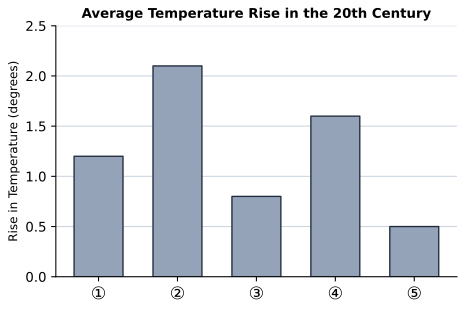
¶5Long-term, region-wide findings are equally fascinating. Average July temperatures in preindustrial Marlow were between 17 and 18 degrees, and the global average was about 14 degrees. Information from 120 regions shows an average rise over the 20th century of 0.8 degrees for the world as a whole. The Kestrel Islands recorded the century's largest rise (2.1 degrees), and the Orlan Basin topped the inland sequence with 1.6 degrees. Detailed records kept at Marlow since 1900 at 12 stations show how readings respond to changes in the network: between 1900 and 1940 the average July reading rose by 0.02 degrees per year, but the closure of many hill stations during the war removed the coolest sites, and the average appeared to jump by 0.5 degrees. The yearly increase resumed only in 1949, and during the second half of the century it averaged 0.03 degrees. In contrast, measurements for the second half of the century show a minimal rise on the Southern Plateau and none in the deep valleys.

棒グラフ。20世紀の平均気温上昇(度)。棒①〜⑤の高さは約1.2、2.1、0.8、1.6、0.5
図(TMPS作成・架空の地域)

¶6Which region has the hottest summers? Coal use has been a key factor, [ 30 ] it in Marlow or in Orlan. Before the war, the air of Orlan was cleaner than that of Marlow, but after 1950 coal use in Marlow declined while in Orlan it rose until the 1970s—and (2) it continues to be higher than in Marlow. The lesson is obvious: the easiest way to slow local warming is to burn less coal.

*1 regional=地域の

Choose the most appropriate answer.

26 [ 26 ]

  1. ① where
  2. ② which
  3. ③ whose
  4. ④ whereby
  5. ⑤ when

27 [ 27 ]

  1. ① However,
  2. ② Instead,
  3. ③ Even so,
  4. ④ As a result,
  5. ⑤ For example,

28 [ 28 ]

  1. ① because
  2. ② owing
  3. ③ due to
  4. ④ regardless of
  5. ⑤ in order to

29 [ 29 ]

  1. ① invented
  2. ② confirmed
  3. ③ separated
  4. ④ postponed
  5. ⑤ occurred

30 [ 30 ]

  1. ① being
  2. ② to be
  3. ③ be
  4. ④ been
  5. ⑤ is

31 (1) For the underlined sentence (1), find the MAIN VERB of the sentence.

  1. ① results
  2. ② measures
  3. ③ remains
  4. ④ interested
  5. ⑤ studies
  6. ⑥ change
  7. ⑦ revealing
  8. ⑧ comparisons
  9. ⑨ well-documented
  10. ⑩ rising

32 (2) In the last paragraph, what does it refer to?

  1. ① coal
  2. ② a key factor
  3. ③ the war
  4. ④ the air
  5. ⑤ Marlow
  6. ⑥ Orlan
  7. ⑦ coal use in Marlow
  8. ⑧ coal use in Orlan

33 Why does the author mention that Valmer’s lighthouse stood on a cold, exposed rock?

  1. ① to explain why his tables became widely known
  2. ② to argue that his records were the most reliable
  3. ③ to show that his work led to later weather offices
  4. ④ to suggest that his readings did not represent the surrounding region
  5. ⑤ to compare his readings with today’s average

34 One of the primary reasons for the global warming trend in the 20th century was ______.

  1. ① a decrease in global rainfall
  2. ② the decline in volcanic eruptions
  3. ③ improvement in weather instruments
  4. ④ shifts in the earth’s orbit
  5. ⑤ greater amounts of carbon dioxide in the air

35 In paragraph 4, which TWO are NOT mentioned as effects associated with warmer weather?

  1. ① a longer growing season
  2. ② fewer insects
  3. ③ lower risk of frost damage
  4. ④ higher rainfall
  5. ⑤ longer tourist seasons
  6. ⑥ more outdoor work

The graph in the passage shows temperature rises in degrees for different regions during the 20th century.

36 Which bar represents the global average?

① ① ② ② ③ ③ ④ ④ ⑤ ⑤

37 Which bar represents the Kestrel Islands?

① ① ② ② ③ ③ ④ ④ ⑤ ⑤

38 Which bar represents the Orlan Basin?

① ① ② ② ③ ③ ④ ④ ⑤ ⑤

39 According to paragraph 5, what affected the average July reading at Marlow during the 1940s?

  1. ① the building of cities near the stations
  2. ② the move of the weather office
  3. ③ a change in the way thermometers were made
  4. ④ the closing of many hill stations during the war
  5. ⑤ new national weather laws

40 What is the most appropriate title for the passage?

  1. ① The History of Weather Stations
  2. ② The Surprising Benefits of Warmer Weather
  3. ③ Understanding Rising Temperatures and Their Regional Patterns
  4. ④ Tracking Temperature from Lighthouse to Weather Office
  5. ⑤ Identifying the World’s Hottest Valleys
▶ 類題 大問③の答えと解説
  • 26([ 26 ]) ⑤ when
    the 1850s, when …=時を表す関係副詞(非制限用法)。
  • 27([ 27 ]) ④ As a result,
    「研究してきた。その結果、いまは月ごとの気温を高い精度で知っている」= As a result。
  • 28([ 28 ]) ③ due to
    mostly due to the steady warming=「主に〜のため」。because は節が必要、owing は to が必要。
  • 29([ 29 ]) ② confirmed
    「1912年に初めて記録され、以後ずっと繰り返し確かめられてきた」= confirmed。
  • 30([ 30 ]) ③ be
    be it A or B=「AであろうとBであろうと」(譲歩の慣用形・原形の be)。
  • 31((1)) ③ remains
    文頭の For those interested … は前置詞句。主語は one of the clearest results、動詞は remains(〜のままである)。results は名詞。
  • 32((2)) ⑧ coal use in Orlan
    while in Orlan it rose until the 1970s—and it continues to be higher than in Marlow。主語は「Orlanでの石炭の使用」。
  • 33 ④ to suggest that his readings did not represent the surrounding region
    同じ文の so his readings said little about the surrounding region が理由の説明。
  • 34 ⑤ greater amounts of carbon dioxide in the air
    第4段落の冒頭:warmer seas と changing atmosphere(above all, 二酸化炭素の増加)。
  • 35 ②・④ fewer insects / higher rainfall
    ①③⑤⑥は本文にある。④は These do not include generally higher rainfall と明記、②「虫の減少」は書かれていない。
  • 36 ③ ③
    世界平均は0.8度。0.8に最も近い棒は③。
  • 37 ② ②
    Kestrel諸島は2.1度(最大)。最も高い棒②。
  • 38 ④ ④
    Orlan盆地は1.6度。1.6の棒は④。
  • 39 ④ the closing of many hill stations during the war
    第5段落:戦時中に多くの丘の観測所が閉鎖され、涼しい地点が除かれて平均が跳ね上がった。
  • 40 ③ Understanding Rising Temperatures and Their Regional Patterns
    歴史・原因・影響・地域差のすべてを含むのは③。①④は歴史だけ、②は一部、⑤は一部の話。
CHECK

30秒 得点診断

本番の過去問、またはそっくり類題セットを60分で解いた結果を選んでください。次にやるべきことを表示します。

大問①(長文・14問)
大問②(長文・11問)
大問③(長文・15問)
FOR PARENTS

保護者の方へ:金沢医科大の英語で知っておきたい3つのこと

① 60分で40問、記述はなし
すべて選択式で、和訳や英作文はありません。そのかわり、約700語の長文が3題あり、1問あたりの時間が短いので、60分で終える配分の練習が必要です。
② 文法・語法・発音は「知っているか」で決まる
各大問の前半の空所・発音・強勢は、読解力ではなく知識の問題です。単語帳に強勢の位置と、rather than のようなかたまりも書いて覚える習慣が点数に直結します。
③ 「2つ選ぶ」「NOT」は消去法
本文の根拠を指せない選択肢を1つずつ消す練習で、安定して取れるようになります。秋からは、解いた答案を第三者に見てもらうと、時間の失い方が見えてきます。
FAQ

よくある質問

Q. 金沢医科大学 医学部の英語2025年度(一般選抜 前期)は、どの順番で解くのがよいですか?

TMPSのおすすめは大問①(20分)→大問②(15分)→大問③(20分)→見直し5分の順です。①は長文のあとに「欠けた文の補充・指示語・語法・発音」が並ぶので、まず空所と発音から取り、内容問題は根拠の1〜2文を探して解きます。時間配分はTMPSの目安で、試験時間は60分です。

Q. 問題文が載っていなくても、どんな問題か分かりますか?

分かります。著作権に配慮して問題本文・図は掲載していませんが、各設問の最初に「どういう問題か」として、設定・何を答えるか・答え方をTMPSの言葉で説明しています。

Q. 答えは、どうやって確かめていますか?

本番の発音問題(9・10)と強勢の音節の問題(15)は、発音辞書(CMU Pronouncing Dictionary)で機械的に照合しました。グラフの棒と本文の数値の対応、解答番号1〜40の通しもスクリプトで確かめています。文法・語義・内容一致は機械では確かめられないため、本文の根拠を解説に書き、迷いやすい設問には「要確認」を付けています。

Q. そっくり類題セットとは何ですか?

2025年度と同じ3大問・同じ解答番号の数(1〜40)で、題材を変えたTMPSオリジナル問題です。欠けた文の補充・指示語・語法・発音・強勢・語義・主動詞・グラフの読み取り・EXCEPTや「2つ選ぶ」まで同じ型にしています。全問の答え・解説をこのページに掲載し、本番形式の問題冊子PDF(全12ページ)も無料で配布しています。

Q. 解説に誤りを見つけたらどうすればいいですか?

公式LINEからお知らせください。確認のうえ修正し、更新日を記載します。

安心安全・継続更新システム

問題等で誤りを発見された場合、修正しますので、TMPS医学館までLINEを下さい。

受験生・指導者の皆様からのご指摘を真摯に受け止め、最も信頼できる過去問解説・類題ライブラリーとして随時アップデートいたします。

LINEで誤りを報告・相談する

一緒に医学部を目指す友達にシェア 📣

🔥 次に読むならこちら

毎月先着3名・無料

金沢医科大の英語を、
あなたの答案で攻略する

「どこで時間を失ったか」「発音・語法で落とす癖」「長文のどこで迷うか」を、Mio先生があなたの答案から直接診断します。